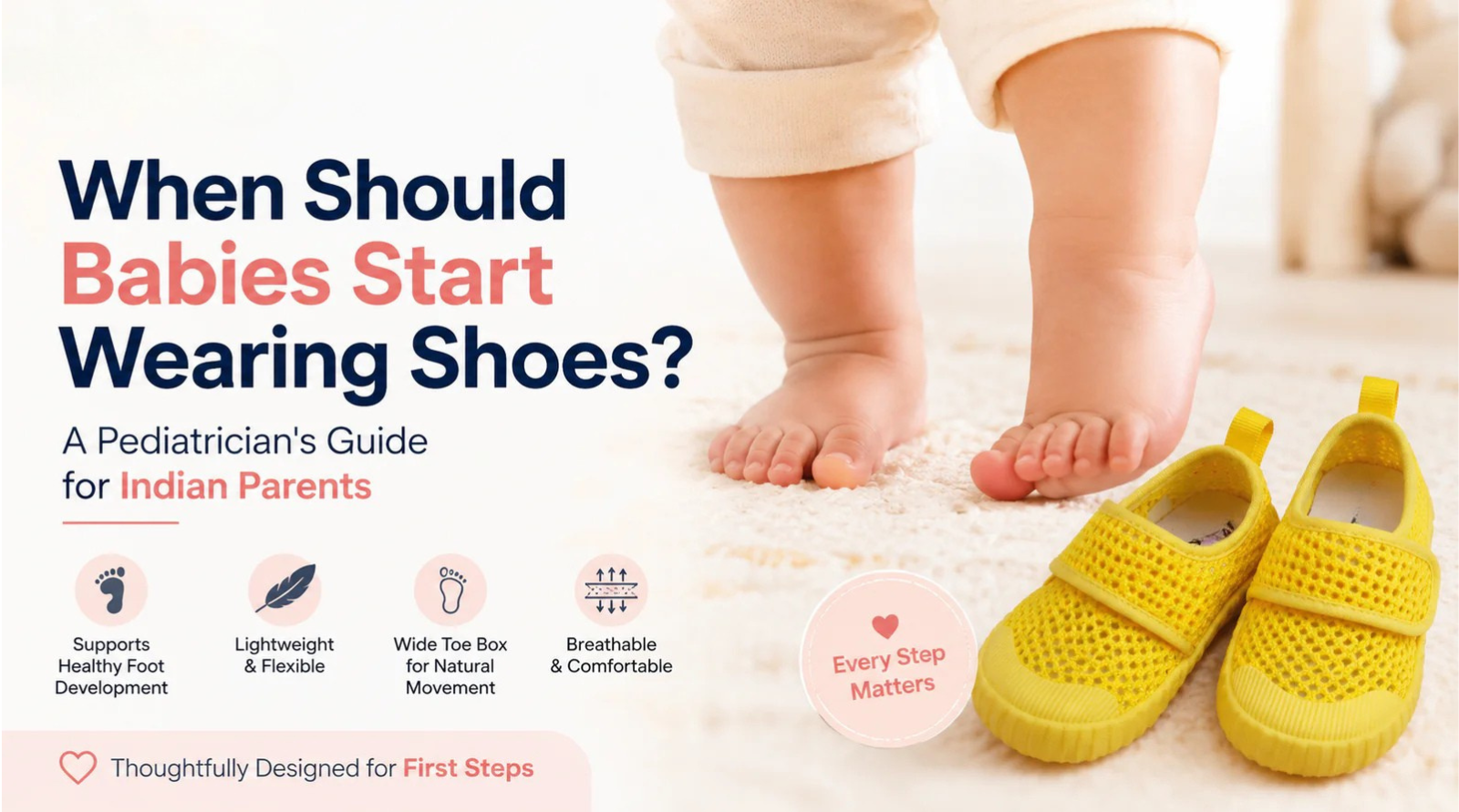
When Should Babies Start Wearing Shoes? A Pediatrician's Guide for Indian Parents
If you've ever been at a family gathering and had a well-meaning relative slide a stiff little pair of shoes onto your six-month-old's feet, you know the feeling. Part of you thinks but they can't even walk yet? And honestly? You'd be right to wonder.
The question of when babies should start wearing shoes is one that almost every new parent in India quietly Googles at some point, usually after someone gifts their newborn the most adorable (and completely unnecessary) pair of leather booties. So let's talk about it properly, no jargon, no judgment, just what pediatricians actually say and what makes sense for real Indian homes.
The honest answer: later than you think
Here's the straightforward truth that most pediatricians will tell you: babies don't need shoes until they're walking outdoors. That's it. That's the rule.
For most babies, independent walking happens somewhere between 12 and 15 months though it can be earlier or later and both are completely normal. Until your child is actually taking steps on their own outside the house, shoes are optional at best and, if chosen poorly, mildly counterproductive at worst.
Before that stage, your baby's feet are doing something incredibly important: they're learning. Every time tiny toes grip a surface, every time a little foot presses flat against the floor, those feet are building the muscle strength, balance, and proprioception that will eventually carry your child through their first wobbly steps. Putting rigid shoes on feet that are still figuring out the world underneath them just gets in the way of that process.
That said, this is India and "just let them go barefoot" isn't always realistic advice.
The Indian home situation is different, and that matters
Here's something that a lot of generic parenting articles (usually written for Western audiences) miss entirely: most Indian homes are not carpeted.
We live on marble floors. Granite floors. Polished ceramic tiles. Beautiful, yes, but also cold in December, slippery year-round, and completely unforgiving when a ten-month-old who's just figured out how to pull themselves up decides to test gravity.
So what do you actually do? A few practical things:
Non-slip socks are your best friend in the pre-walker phase. They provide just enough grip on smooth floors without adding any stiffness or weight to the foot.
Soft-soled booties the kind you can fold completely flat are fine for outdoor occasions like a naming ceremony, a family function, or a visit to the temple. The keyword here is soft-soled. If you can't fold it in half with two fingers, it's already too stiff for a baby who isn't walking yet. ONYC's toddler first step shoes are built on exactly this principle - soft, flexible, and designed for feet that are still growing into themselves.
Skip the occasion shoes with rigid soles. It doesn't matter how cute they are. If a baby can't walk, a stiff sole serves no purpose and can actually restrict the natural movement and development of the foot.
India's warm climate also means breathability matters from day one. Feet that are wrapped in non-breathable materials sweat, get uncomfortable, and in extreme cases develop rashes or fungal issues. Mesh uppers, soft cotton, and natural fabrics are always better choices than thick synthetic materials, something ONYC keeps central to their design philosophy, even for the youngest wearers.
So what changes when they start walking?
Everything, actually. The moment your baby takes their first independent steps outdoors which is genuinely one of the most emotional things you will ever witness their feet need real support for the first time.
This is where choosing the right first walker shoes in India actually matters. And this is where a lot of parents, with the best intentions, go slightly wrong.
The most common mistake?
Buying shoes that look supportive. Thick soles. High ankle cuts. Dense padding. Parents reach for these because they assume more structure means more protection. But pediatricians and podiatrists say the opposite, what a first walker needs is a shoe that gets out of the way of the foot's natural movement, not one that tries to control it.
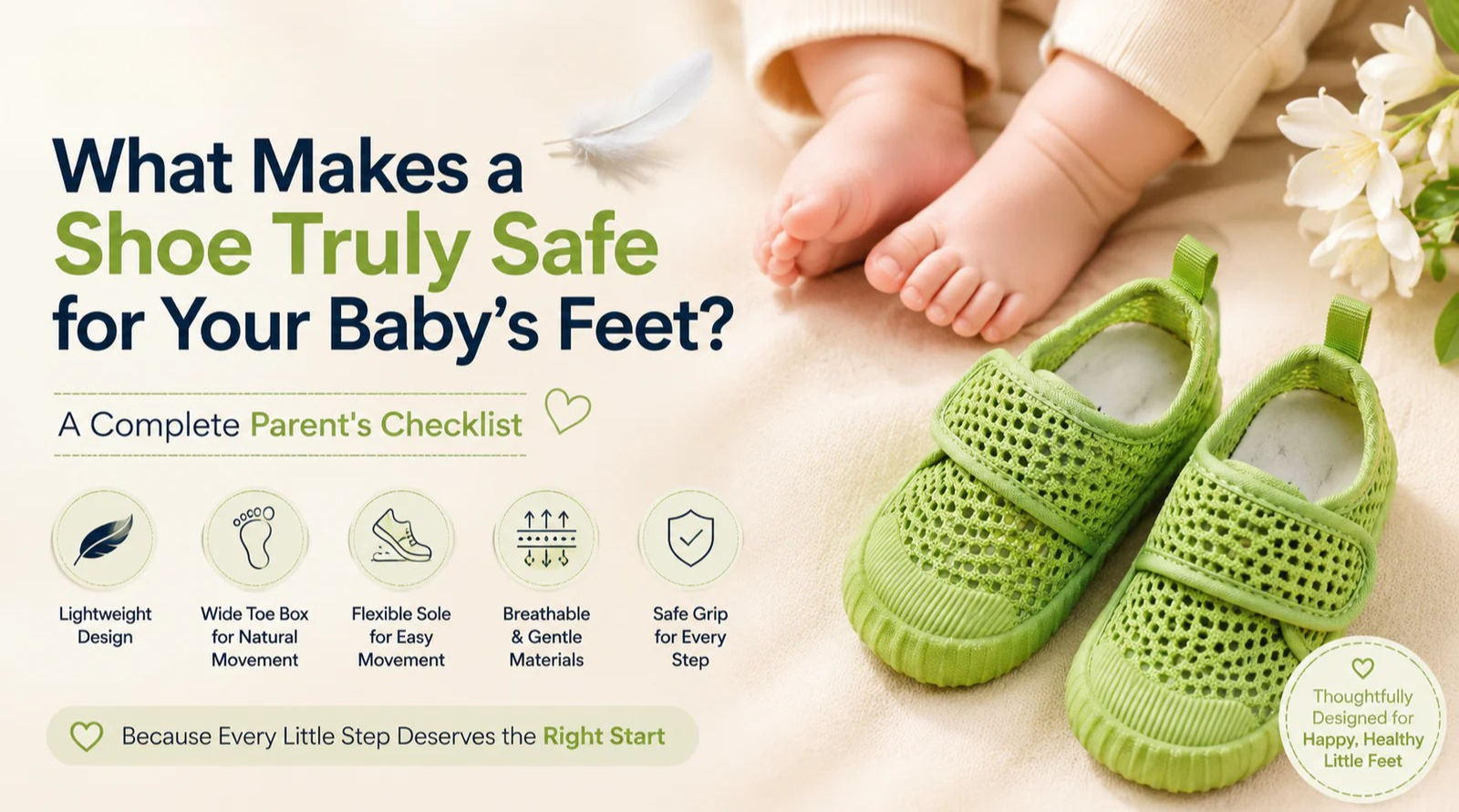
The ideal first walker shoe: is lightweight. A toddler's leg muscles are still developing. Heavy shoes fatigue them quickly and shorten how long they want to walk which means less practice, which means slower development. ONYC's first step shoes are designed to be genuinely light, so little legs don't have to work overtime just to lift their own feet.
Has a flexible sole: The foot bends at the ball just behind the toes with every single step. A sole that doesn't allow that bend forces the child to lift the whole foot at once, which changes their gait in ways that can cause problems further down the line. When you're looking at any shoe, do the bend test: hold the heel in one hand, the toe in the other, and bend. It should give easily at the forefoot.
Has a wide toe box: Toddlers splay their toes when they stand, it's how they balance. A narrow or tapered front compresses those toes inward and suppresses the very mechanism they're using to stay upright. Check out ONYC's bestselling first step range the toe boxes are designed wide enough to let that natural splay happen without restriction.
Has a thin sole with good grip: Thick cushioned soles feel plush but actually reduce the sensory feedback your child's feet need to understand the ground beneath them. Thin soles that still provide non-slip protection are exactly what healthy walking shoes for babies should offer and they work especially well on the marble and tile surfaces that dominate Indian homes.
When should you buy the next size up?
Toddler feet grow fast we're talking roughly one full size every two to three months between ages one and three. This catches parents off-guard constantly. A shoe that fit beautifully at thirteen months can be genuinely too small by sixteen months, and your child might not tell you they're toddlers, they don't have the vocabulary for "my toes are cramped."
Check fit monthly. With the shoe on and your child standing, press down gently at the tip of the longest toe. You should feel about one thumb's width of space approximately 1 to 1.5 centimetres between the toe and the end of the shoe. Less than that and it's time to size up.
Not sure what size to pick? ONYC's size finder takes the guesswork out completely measure your child's foot in centimetres and it maps directly to the right size across the range.
Don't buy two sizes ahead to "make them last longer." This is incredibly common in Indian families and completely understandable kids' shoes aren't cheap. But shoes that are too big cause the foot to slide forward, force the toes to grip to keep the shoe on, and create instability that affects how the child walks. Buy the right size, check monthly, and size up when it's time.
Are flexible sole shoes really better? Yes, and here's why
This comes up so often that it deserves its own section. Parents see "flexible sole" on a product and sometimes wonder if it means the shoe won't last, or won't protect properly. The opposite is true.
A flexible sole toddler shoe works with the foot's natural mechanics. When your child takes a step, their foot needs to land at the heel, roll through the midfoot, and push off at the toes. A stiff sole blocks the last two steps entirely. The child ends up doing a flat-footed slap with every step which looks awkward, causes faster fatigue, and over time teaches the muscles and joints a movement pattern that isn't efficient or healthy.
Flexible soles also improve balance and coordination because they allow ground feedback the subtle pressure signals the foot sends to the brain to make constant tiny adjustments in posture and stability. Thick, stiff soles muffle that signal. Thin, flexible soles let it through.
This is exactly why ONYC uses flexible soles across their kids' footwear range. It's not a design gimmick, it's the single most important structural choice in a child's shoe. Their Ducky First Step Shoes and Cloudy First Step Shoes are two of their most loved options, with hundreds of parent reviews specifically calling out how naturally their toddlers move in them.
A quick note on hand-me-down shoes
This one comes up a lot in Indian families, where resources are shared generously across cousins and siblings. The instinct makes sense, shoes are expensive and toddlers grow out of them fast. But used shoes are genuinely not a good idea for growing feet.
Shoes mold to the wearer's foot over time. The insole compresses in specific places. The heel counter adjusts to a particular foot width. The outsole wears unevenly based on that child's gait. When you put those shoes on a different child, you're essentially asking their developing foot to fit into the imprint of someone else's and that can create real issues.
If cost is a concern, the better approach is to invest in one good pair at a time from a brand like ONYC that's specifically designed for healthy foot development, size up when needed, and skip the hand-me-downs.
Frequently Asked Questions
When should babies start wearing shoes?
Babies should start wearing proper shoes when they begin walking independently outdoors, usually around 12 to 15 months. Before this stage, soft-soled booties or non-slip socks are sufficient for most situations.
Should babies learn to walk barefoot or in shoes?
Barefoot is ideal indoors on safe surfaces, it builds foot strength, balance, and proprioception. Shoes are necessary outdoors or on slippery indoor surfaces like the marble and tile floors common in Indian homes.
Are flexible sole shoes better for toddlers?
Yes, absolutely. Flexible soles allow the foot to complete its natural gait cycle, heel to midfoot to toes with every step. Stiff soles disrupt this movement and can cause fatigue and poor gait patterns over time.
What should I look for in first walker shoes in India?
Prioritise lightweight construction, a flexible forefoot sole, a wide toe box, breathable uppers, and a non-slip rubber outsole especially important for marble and tile floors common across Indian homes. ONYC's first step shoe range is designed with all of these in mind.
How often should I replace toddler shoes?
Check fit monthly. Between ages one and three, most toddlers need a new size every two to three months. Replace when there's less than half a centimetre of growing room at the longest toe. Use ONYC's size finder to always get the right fit.
The Final Verdict There's so much noise around baby products, every category comes with a hundred options and twice as many opinions. Shoes, thankfully, aren't as complicated as the marketing sometimes makes them seem.
Your baby doesn't need shoes until they're walking outdoors. When that day comes and it will come faster than you expect, what they need is simple: something light, flexible, wide, and breathable that lets their feet do the work they were built to do.
For Indian parents specifically, add non-slip grip to that list, because our floors demand it. And always, always check fit monthly toddler feet wait for no one.
ONYC is built around exactly these principles of flexible soles, wide toe boxes, breathable uppers, and a deep understanding of how Indian children actually live and move. Browse their first step shoe collection, use the size finder to get the fit right, and check the bestsellers if you want to start with what thousands of Indian parents have already loved and reviewed. Because the best thing you can do for your child's feet right now is get out of their way and give them a shoe that does the same.