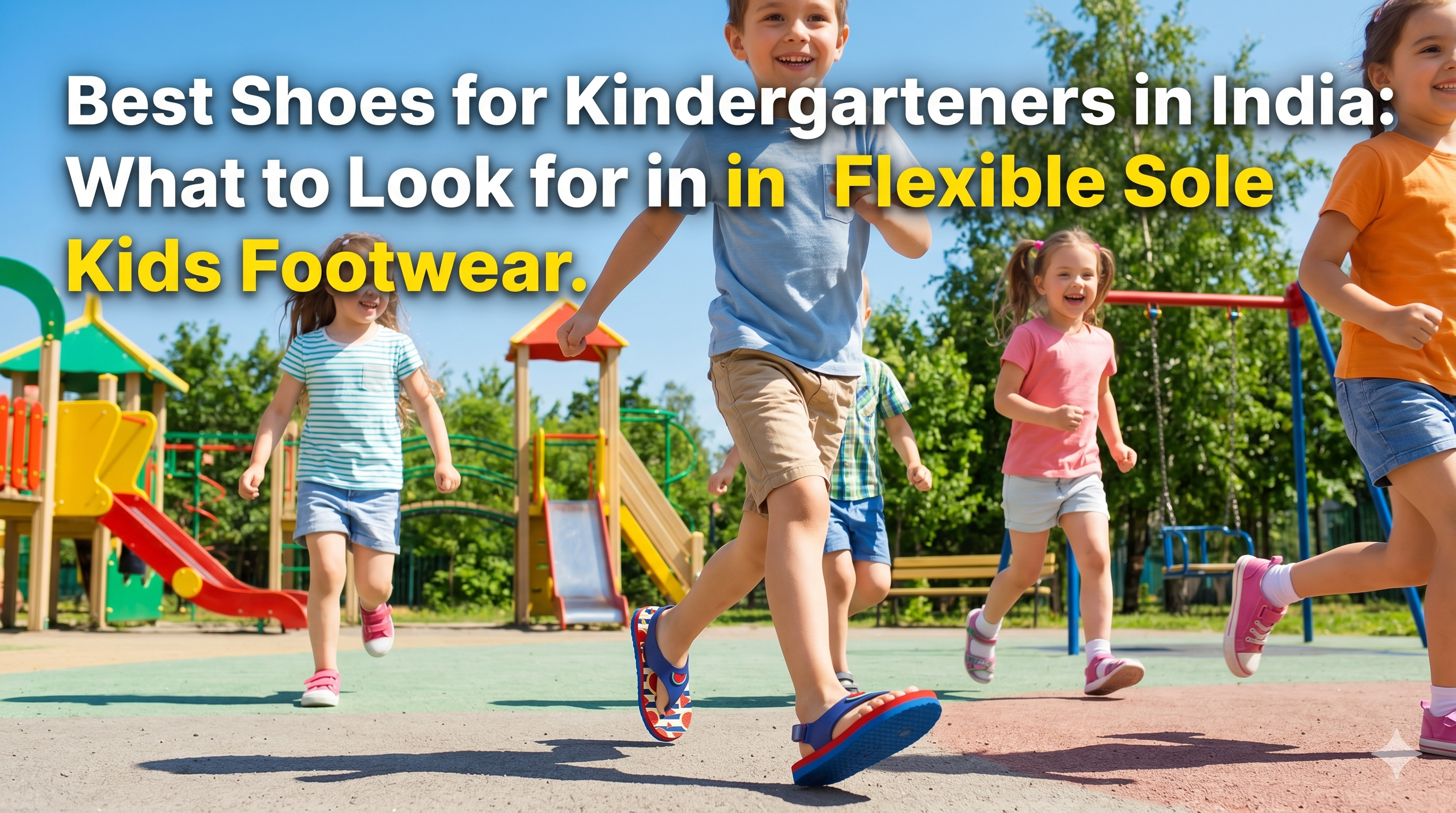
Best Shoes for Kindergarteners in India: What to Look for in Flexible Sole Kids Footwear
The years between 3 and 6 are some of the most active in a child's life. Kindergarteners are running, jumping, climbing, dancing, and exploring every corner of the world around them. Their feet, still growing rapidly and forming the foundations of lifelong posture and gait, need footwear that can keep up, without holding them back.
Yet many parents unknowingly choose shoes that are too stiff, too heavy, or too rigid for this age group. The result? Tired feet, unhappy children, and footwear that is outgrown or worn out far too quickly.
The answer lies in one key feature that paediatric experts and parents across India are increasingly talking about: flexible soles.
Why Flexible Soles Matter for 3–6 Year Olds
Children's feet at the kindergarten stage are not yet fully formed. In fact, the arch of the foot is still developing throughout this period. The foot needs to flex, bend, and respond naturally to every surface it encounters because that is exactly how the muscles, tendons, and ligaments strengthen.
Here is what happens when a kindergartener wears a rigid-soled shoe:
-
The foot cannot roll naturally through each step
-
The muscles of the foot and lower leg do not engage properly
-
Balance and coordination development is slowed
-
The child tires more easily and may resist wearing shoes
A flexible sole, on the other hand, moves with the foot. It bends at the ball of the foot (where the foot naturally bends), supports the heel, and allows full sensory feedback from the ground. This keeps feet strong, active, and developing correctly.
What Does "Flexible Sole" Actually Mean?
It is a term used widely in kids' footwear, but not always defined clearly. Here is a simple test you can do in-store or after receiving a pair online:
The Pinch Test
Hold the shoe at the heel and the toe and bend it towards each other. A genuinely flexible sole will bend easily, with the resistance feeling similar to folding a thick magazine. If the shoe barely bends, it is too rigid for a young child.
The Twist Test
Hold the shoe at both ends and twist it in opposite directions. A flexible shoe will twist with moderate ease. A stiff shoe will barely move at all.
The Press Test
Press your thumb into the centre of the sole. A good flexible sole will give under pressure rather than remaining completely firm.
If a shoe passes all three tests, it is suitable for a kindergartener.
The Difference Between School Shoes, Play Shoes, and Home Shoes
One of the most common mistakes parents make is buying one type of shoe and expecting it to work for every situation. At the kindergarten age, children move through several different environments throughout the day and each one has slightly different requirements.
School Shoes
These need to be:
-
Closed toe (most Indian schools require this)
-
Easy to put on and take off independently and velcro is ideal for this age
-
Durable enough to handle a full school day of activity
-
Breathable to keep feet comfortable through morning assembly, classroom time, and lunch break
-
Flexible enough to support PE class or outdoor play
Play Shoes
These are for the park, playground, and outdoor adventures. They need:
-
Excellent grip on varied surfaces like grass, sand, concrete
-
Easy to clean construction
-
Lightweight design so children can run freely
-
Secure fit that does not slip off mid-run
Home Shoes or Indoor Sliders
At home, children benefit from footwear that:
-
Is easy to slip on and off
-
Has a non-slip sole for marble or tiled Indian floors
-
Is soft and comfortable for indoor movement
At ONYC, we have thoughtfully designed collections across all three categories, from flexible everyday shoes to quick-on sliders and comfortable sandals.
What Indian Parents Should Look for: A Complete Checklist
When shopping for shoes for your 3-6 year old in India, run through this checklist before making a purchase:
Flexible Sole
The most important feature. Use the three tests above.
Wide Toe Box
Kindergarteners' toes need room to spread during walking and running. Avoid pointed or narrow toe boxes that squish the toes together.
Velcro or Elastic Closure
Children this age are learning independence. Velcro straps allow them to put on and remove their own shoes which is a huge confidence boost. Avoid complicated laces for this age group.
Lightweight Construction
The shoe should feel light when you hold it. Heavy shoes tire little feet quickly and can affect the way children walk.
Breathable Upper
India's warm climate demands breathability. Look for mesh panels, fabric uppers, or ventilation features that allow airflow.
Non-Slip Sole with Grip
Whether it is a monsoon-slicked footpath or a smooth classroom floor, grip matters. Look for textured rubber soles.
Cushioned Footbed
Kindergarteners are on their feet for hours. A soft, padded insole provides comfort during long days without restricting natural foot movement.
Safe Materials
Children put their hands in their shoes, sit on them, and sometimes chew them. Ensure the shoe uses non-toxic, child-safe materials throughout. At ONYC, all our shoes use water-based, non-toxic colours and child-safe materials.
ONYC's Recommendations for Kindergarteners
At ONYC, our collections are built around exactly what kindergarteners need i.e comfort, flexibility, safety, and designs that children actually want to wear.
For School Days
ONYC's closed-toe boys' and girls' shoes feature flexible soles, velcro closures, and breathable uppers,making them ideal for the Indian school environment. The lightweight construction means children do not feel weighed down, and the non-slip soles provide grip whether they are running on the playground or walking on marble corridors.
Shop Boys' School Shoes | Shop Girls' School Shoes
For Outdoor Play
ONYC sandals for boys and girls are designed for active outdoor use, with anti-slip rubber soles, adjustable velcro straps, and quick-clean materials. Perfect for the park, garden play, and casual outings.
For Home Use
ONYC sliders and flip-flops are easy to slip on and off, with non-slip soles that are safe on Indian tiled and marble floors. Bright, playful designs make them a favourite with kids.
Shop Boys' Sliders | Shop Girls' Sliders
Tips for the Indian Climate: Season-Smart Shoe Choices
India's diverse climate means that the perfect kindergartener's shoe changes across the year. Here is a quick guide:
Summer (March – June)
Priority: Breathability above everything else. Avoid synthetic uppers that trap heat. Open sandals or mesh-upper shoes keep feet cool during hot afternoons.
ONYC recommendation: Kids' sandals with open design and breathable straps
Monsoon (July – September)
Priority: Grip and quick-dry materials. Leather and fabric-based shoes become waterlogged and take hours to dry, increasing the risk of fungal infections. Choose rubber, synthetic, or waterproof materials.
ONYC recommendation: Rubber-soled sandals or sliders that dry quickly and provide excellent grip on wet surfaces
Winter (October – February)
Priority: Warmth and coverage. Closed-toe shoes become essential, especially in North India. Look for shoes with soft lining and breathable-but-warm uppers.
ONYC recommendation: Closed-toe kids' shoes with cushioned lining from our Boys' and Girls' collections
Common Mistakes Parents Make When Buying Shoes for Kindergarteners
1. Buying a size too big "to last longer" While it is tempting to buy larger to save money, shoes that are too big cause tripping and develop poor walking habits. Stick to 1–1.5 cm of growing room maximum.
2. Prioritising looks over function That stiff, hard-soled formal shoe might look adorable, but it is doing more harm than good if worn daily. Save formal shoes for special occasions.
3. Skipping the flexibility test Always test the sole before buying, even from trusted brands. Flexibility varies within a brand's own range.
4. Not measuring regularly Children's feet grow up to two full sizes per year at this age. A shoe that fit in January may be too small by April.
5. Ignoring what the child says If your child says a shoe is uncomfortable, believe them. Children generally do not complain about footwear unless something is genuinely wrong.
Frequently Asked Questions
Q1. What is the best type of shoe for a kindergartener in India?
A lightweight, flexible sole shoe with a wide toe box, velcro closure, and breathable material is ideal for kindergarteners in India. ONYC's boys' and girls' shoe collections are specifically designed for this age group.
Q2. Should kindergarteners wear shoes with arch support?
At this age, the arch is still naturally forming. Paediatric podiatrists generally recommend against heavy arch support for children unless prescribed. A flat, flexible sole with a cushioned footbed is preferable.
Q3. Are velcro shoes better than laced shoes for 3–6 year olds?
Yes, velcro is strongly recommended for this age group. It supports independence, is faster to put on and take off, and eliminates the tripping hazard of loose laces.
Q4. How do I know if my child's shoes are flexible enough?
Use the pinch, twist, and press tests described above. The sole should bend easily at the ball of the foot.
Q5. Where can I buy flexible sole kids' shoes online in India?
Visit onyc.in for a full range of flexible, lightweight kids' footwear delivered across India.
Final Thoughts
For kindergarteners in India, the right shoe is not about how it looks in the box, it is about how it performs on busy little feet through a full day of learning, playing, and exploring.
Flexible soles, breathable materials, safe construction, and age-appropriate closures are the non-negotiables. Everything else is a bonus.
At ONYC, we have designed our entire kids' footwear range with exactly these principles in mind. Because when your child's feet are comfortable and supported, there is nothing slowing them down.
Shop Boys' Shoes | Shop Girls' Shoes | Shop Kids' Sandals | View All Collections