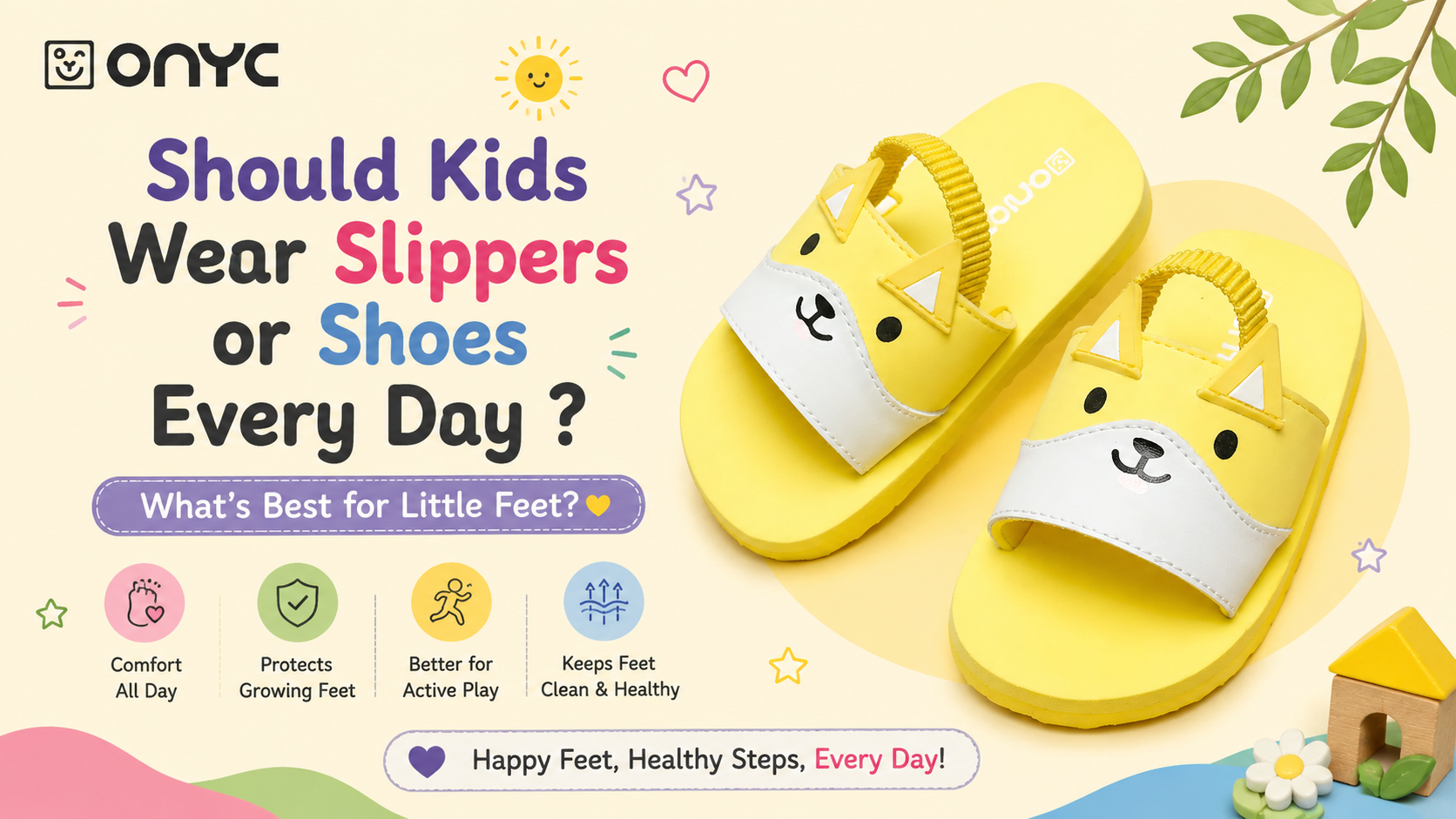
Should Kids Wear Slippers or Shoes Every Day?
Your child comes home from school, kicks off their shoes and immediately reaches for their favourite pair of slippers. Comfortable? Absolutely. Easy to wear? Definitely. But then comes the question many parents eventually ask: Should kids wear slippers every day, or are shoes a better choice?
The answer isn't as simple as choosing one over the other. Children don't necessarily need shoes all day, every day. What they need is footwear that matches where they are, what they're doing and how much support and protection their feet need. For younger children especially, safe barefoot time indoors can be perfectly natural, while properly fitted footwear becomes more important outdoors and during active movement.
So, rather than asking "Are slippers bad for kids?", parents should ask a better question: "When should my child wear slippers, and when do they need shoes?"
Are Slippers Good for Kids Every Day?
Slippers can be perfectly useful around the house, particularly when the floor is cold or when some protection from the ground is needed. They're easy to put on, comfortable and often a favourite among children.
The problem starts when a loose, poorly fitting slipper becomes the child's everywhere footwear for school runs, playgrounds, long walks and active outdoor play.
Children move differently when they're running, jumping and changing direction. Footwear that doesn't stay securely on the foot can make those activities less comfortable. Children's podiatry guidance generally recommends footwear that fits securely around the heel and is appropriate for the activity.
Slippers have their place. They just shouldn't automatically become the answer to every footwear situation.
When Are Slippers a Good Choice?
Think of slippers as home footwear, rather than an all-purpose replacement for shoes.
For example, a soft, comfortable pair can work well when your child is:
- Walking around the house
- Playing indoors Moving around on clean, safe floors
- Looking for something easy to put on and take off
- Wearing footwear for short periods
If your child is simply wandering around the living room after school, there's usually no reason to force them into structured outdoor footwear.
In fact, children who are safely barefoot indoors may naturally use their feet and toes as they move. Some NHS children's foot-care guidance specifically recommends barefoot walking where it is safe.
When Should Kids Wear Shoes Instead?
The moment your child's environment becomes more demanding, footwear needs to change with it.
School, playgrounds, parks, outdoor walks, running, cycling and sports all involve more movement and exposure to rough or unpredictable surfaces. That's when a properly fitted shoe can provide useful protection and help keep the foot securely in place.
For younger children who are walking outdoors, the NHS recommends footwear that fits correctly and holds the heel securely.
And for active toddlers, the American Academy of Pediatrics recommends comfortable footwear with nonskid soles, such as sneakers, once they begin walking outdoors.
The more your child moves, the more important the right fit becomes.
Slippers vs Shoes: Which Is Better?
There's no universal winner because they serve different purposes.
|
Situation |
Better Choice |
Why |
|
Playing indoors |
Barefoot or slippers |
Comfortable for safe indoor movement |
|
Around the house |
Slippers |
Easy and convenient |
|
School |
Properly fitted shoes |
Secure for extended wear |
|
Playground |
Shoes |
Better protection and secure fit |
|
Running/active play |
Activity-appropriate shoes |
Designed for movement |
|
Outdoor walking |
Properly fitted shoes |
Protection and stability |
The important word here is appropriate.
A slipper isn't automatically a bad choice, just as a shoe isn't automatically a good one. A poorly fitted shoe can be just as problematic as a loose slipper.
What Makes a Good Everyday Kids' Shoe?
If your child spends several hours a day in their shoes, comfort shouldn't be negotiable.
Look for a pair that follows the natural shape of the foot, provides enough room around the toes and stays securely in place. Breathable materials can also help keep feet more comfortable during extended wear.
For younger children, fastenings such as Velcro, laces or adjustable closures can help keep the heel secure and prevent the foot from sliding forward.
And don't assume that a heavier shoe is automatically more supportive.
Very stiff or heavy footwear can actually make walking more difficult for some children.
Good kids' footwear should support movement - not fight it.
What About Toddlers?
Toddlers deserve extra attention because they're still learning how to move confidently.
When children first start walking, they don't necessarily need shoes indoors. Barefoot movement in a safe environment can allow them to develop their balance and movement skills naturally. Once they're walking outdoors, however, they need footwear that protects their feet without restricting them.
This is where choosing the right first-step shoes becomes important.
ONYC's First Step Footwear collection includes lightweight and breathable styles designed for younger children, giving parents an option when their little ones need outdoor protection without unnecessarily bulky footwear.
The Biggest Mistake Parents Make
Buying footwear based purely on appearance.
That adorable slipper may look perfect with your child's pyjamas. That shiny shoe may look fantastic in photographs. But neither matters much if your child can't move comfortably in them.
Children's feet need room to grow and move. Their footwear should be wide enough around the toes, long enough to avoid pressure and secure enough around the heel to prevent excessive movement.
So before asking, "Does this look cute?", ask:
"Can my child comfortably walk, run and play in this?"
That's the better shopping question.
How Do You Know If Your Child's Footwear Isn't Working?
Your child may not say, "This footwear doesn't fit correctly."
Instead, you might notice them constantly removing their shoes, complaining about discomfort, developing red marks or refusing to wear a particular pair.
Check their feet regularly for redness or irritation and pay attention to how the footwear behaves when they walk. Children's feet grow quickly, so a pair that fitted perfectly a few months ago may no longer be suitable.
If there's persistent pain, unusual walking difficulty or another concern about your child's feet, it's sensible to speak with a qualified healthcare professional.
So, Should Kids Wear Slippers or Shoes Every Day?
Neither needs to be worn all day, every day.
For safe indoor environments, barefoot time or comfortable slippers can be perfectly reasonable. For school, outdoor walking, playgrounds and active play, properly fitted shoes are generally the more practical choice.
The real goal isn't to keep children in shoes constantly.
It's to give their feet the right combination of freedom, protection and comfort for each situation.
And that's a much more useful rule than simply saying, "Shoes are better than slippers."
Conclusion: It's About Where Their Little Feet Are Going
Kids don't need one footwear solution for their entire day. Slippers can be great for cosy indoor moments, while properly fitted shoes are better suited to school, outdoor adventures and active play. What matters most is choosing footwear that fits well, stays secure and lets growing feet move comfortably.
So before reaching for another pair, think about your child's day, not just their outfit. When they're ready to head outdoors, explore ONYC's kids' footwear collection for lightweight, comfortable styles made to keep up with every little step.
Right place. Right footwear. Happier little feet.
Frequently Asked Questions
Should children wear shoes all day?
No. Children don't necessarily need shoes indoors, particularly in safe environments. Barefoot time can be beneficial for natural movement, while shoes become important outdoors for protection.
Are slippers good for everyday use?
Slippers can be useful around the house, but loose or poorly secured slippers aren't ideal for activities involving lots of running, walking or changing direction.
Are shoes better than slippers for toddlers?
For outdoor walking, properly fitted shoes are generally more appropriate because they protect the feet and can stay securely in place. Indoors, toddlers can often go barefoot safely.
What type of shoes are best for active kids?
Look for comfortable, properly fitted footwear with sufficient toe room, a secure heel, suitable grip and breathable materials. The shoe should match the child's activity.
Can kids wear slippers outside?
They can for brief, low-activity situations depending on the design and surface, but slippers that don't securely hold the foot aren't the best choice for running, playground activities or extended outdoor walking.
When should toddlers start wearing shoes?
Children generally don't need proper shoes until they are walking independently outdoors. At that stage, footwear should be correctly fitted and comfortable.
Where can I find comfortable footwear for kids in India?
Parents can explore ONYC's official kids' footwear collection for first-step shoes, lightweight sneakers and other everyday children's footwear.
Conclusion: There’s No One-Shoe-Fits-All Rule
The best footwear choice isn't about picking shoes over slippers, it's about understanding what your child is doing that day. Cosy slippers can be perfect for indoor play, while a well-fitted pair of shoes makes more sense when it's time for school, the playground or an outdoor adventure. Give little feet the freedom they need, the protection they deserve and the comfort they won't want to take off.
When it's time to step outside, explore ONYC's kids' footwear collection and find a pair ready to move, play and grow with them.
Because every little adventure starts with the right step.