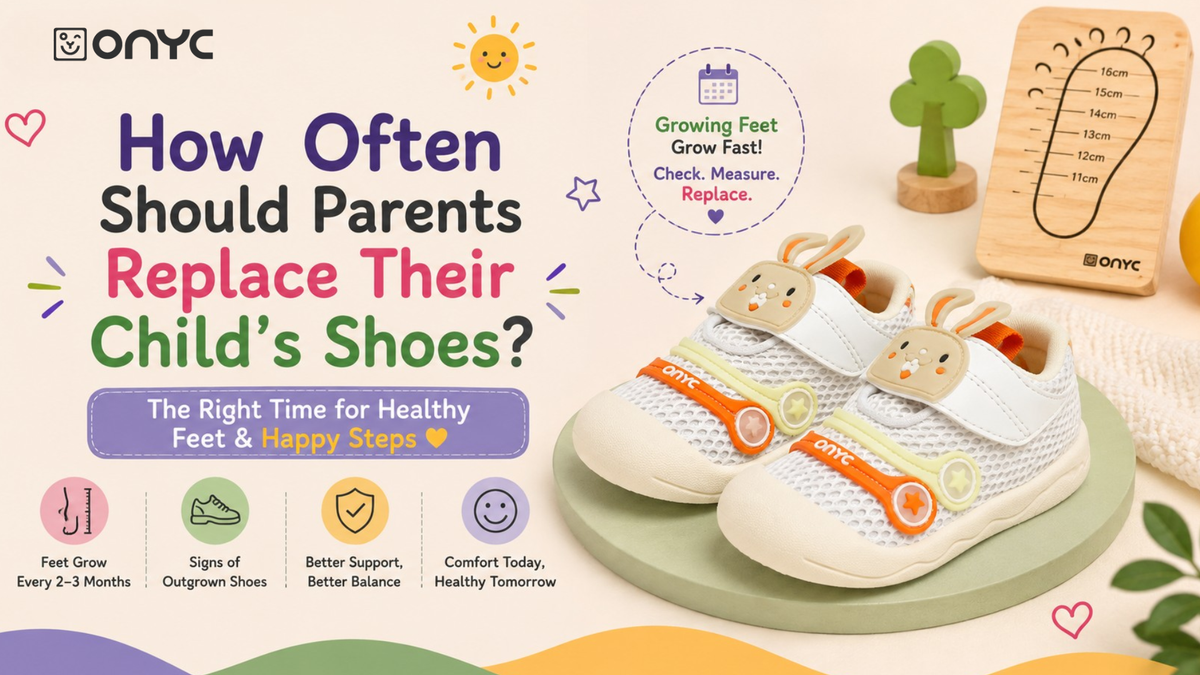
How Often Should Parents Replace Their Child's Shoes?
One minute, you're buying your child's first pair of shoes because they look ridiculously tiny. A few months later, you're wondering how those same shoes suddenly seem too small. The toes look cramped, your child keeps taking them off, and somehow their feet appear to have grown overnight. If this sounds familiar, you're not alone. Children's feet are constantly changing, which means their footwear needs to be checked more often than most parents realise.
So, how often should parents replace their child's shoes? There isn't a magic number of months that applies to every child. The right time depends on how quickly their feet are growing, how often they wear the shoes, how active they are and the condition of the footwear. For some children, a pair may need replacing because they've outgrown it; for others, months of school runs, playground adventures and everyday movement may wear the shoes out first.
The better question isn't, "How old are these shoes?" It's "Do these shoes still fit and support my child's feet comfortably?"
Why Children's Shoes Need More Attention Than You Think
Children don't spend their days sitting quietly with their feet protected from the world. They run, jump, climb, kick balls, race their friends and somehow find every puddle within a five-kilometre radius. Their shoes experience all of that with them.
At the same time, children's feet are growing. A pair that felt comfortable a few months ago can gradually become restrictive without the child or parent immediately noticing. This is particularly important for babies, toddlers and younger children, who may not always be able to explain exactly what feels uncomfortable.
That's why footwear shouldn't be treated as something you buy once and forget about. Regular fit checks are just as important as choosing the right pair in the first place.
How Often Should You Check Your Child's Shoes?
There isn't a strict schedule because every child's growth is different. However, checking the fit every few months is a sensible habit, particularly for younger children.
You should also check sooner if your child suddenly starts complaining about their shoes, refuses to wear a favourite pair or seems uncomfortable while walking or running. A change in behaviour can sometimes be the first sign that the footwear no longer feels right.
Think of it like checking whether their clothes still fit. You wouldn't wait until your child's trousers become impossible to button before buying the next size. Shoes deserve the same attention.
A few minutes of checking can prevent weeks of uncomfortable footwear.
7 Signs Your Child May Have Outgrown Their Shoes
Some signs are obvious. Others are surprisingly easy to miss.
-
Their toes are very close to the front of the shoe.
-
They complain that their shoes feel tight.
-
You notice redness, rubbing or blisters.
-
Their heel keeps slipping.
-
They frequently remove the shoes.
-
They seem uncomfortable while walking or running.
- They suddenly prefer another pair that previously wasn't their favourite.
One sign doesn't necessarily mean the shoes need replacing immediately. But when several appear together, it's worth checking the fit carefully.
And remember: children don't always say, "My shoes are too small." They may simply say, "I don't want to wear them."
Can Shoes Be Too Small Even If They Look Perfect?
Absolutely.
This is one of the biggest mistakes parents make when deciding whether to replace children's footwear. If the shoes still look clean and the soles aren't worn, it can feel wasteful to replace them.
But the outside condition of a shoe doesn't tell you whether your child's foot has outgrown it.
A pair can look almost brand new while the toes are already running out of space. This is why parents should check how the footwear fits while the child is standing and moving, rather than judging the shoes only by their appearance.
In other words :
Don't let a good-looking shoe convince you to ignore a bad fit.
How Should Kids' Shoes Fit?
Put the shoes on your child and have them stand naturally. Check that the longest toe isn't pressed against the front and that the heel remains comfortably secure. Then let them walk, turn and move around.
The shoe should feel secure without squeezing the foot. It should also allow natural movement rather than making your child feel restricted.
Buying a much larger size simply because your child is growing isn't the solution either. Excessively loose footwear can allow the foot to move around inside the shoe, which can affect comfort and stability.
You need room for growing feet, not shoes that are already too big for them.
What If the Shoes Fit but They're Completely Worn Out?
Growth isn't the only reason children need new shoes.
Think about what a typical pair goes through. School mornings, playgrounds, weekend outings, running around with friends, rainy roads and the occasional adventure that starts with "Don't climb that!"
Over time, the sole can become smoother, cushioning can flatten and the upper can start losing its shape. Fasteners may become damaged, and the grip that once felt secure may no longer be as effective.
Take a close look at the shoes every few months.
|
What to Check |
Still Good |
Time to Replace |
|
Fit |
Comfortable |
Toes feel cramped |
|
Heel |
Secure |
Repeated slipping |
|
Sole |
Visible tread |
Excessive wear |
|
Upper |
Intact |
Tears/separation |
|
Fasteners |
Work properly |
Damaged |
|
Comfort |
Child moves naturally |
Rubbing/complaints |
A worn-out pair isn't automatically bad because it's old. It's bad when it no longer does its job properly.
Why Active Children May Need New Shoes Sooner
A child who wears one pair every day will naturally put more mileage on it than a child who rotates between several suitable pairs.
Think of your child's footwear like their school bag. If it goes everywhere with them every day, it's going to show signs of use much sooner.
Children who spend a lot of time running, playing outdoors or participating in sports may therefore need their footwear checked more frequently. This doesn't mean buying new shoes constantly. It simply means paying attention to how the footwear is holding up.
Rotating appropriate pairs can also help reduce excessive wear, particularly when one pair becomes wet or dirty.
Should Parents Buy Different Shoes for Different Activities?
You don't need a wardrobe full of children's footwear.
But having footwear suited to your child's routine can be useful. A pair used for school may experience very different wear from a pair used for weekend outings or active play. Choosing footwear based on the activity can also help each pair last longer.
For example, a lightweight everyday sneaker can be useful for regular outings, while first-step footwear is designed specifically around the needs of younger children learning to move confidently.
ONYC's kids' footwear collection includes lightweight sneakers, first-step footwear and everyday styles, giving parents options based on their child's age, activity and comfort needs.
The goal isn't more shoes. It's the right shoes for the right stage.
How Can You Make Your Child's Shoes Last Longer?
Children growing quickly will eventually outgrow their footwear no matter how carefully you look after it. Still, good care can help prevent unnecessary damage.
Try rotating suitable pairs when possible, allowing wet footwear to dry completely before the next use and cleaning shoes according to the manufacturer's instructions. It's also worth storing them somewhere dry and ventilated rather than throwing them into a damp corner after a rainy day adventure.
But there's one rule parents shouldn't compromise on:
Never make a child continue wearing an uncomfortable pair simply because you want to get a few more weeks out of it.
No amount of shoe care can make an outgrown shoe fit again.
A Simple Shoe Check Parents Can Do Tonight
Take the pair your child wears most often. Put them on. Have your child stand, walk and move around.
Then ask yourself:
-
Are their toes comfortable?
-
Does the heel stay secure?
-
Is the sole still in good condition?
-
Does the shoe still bend and move comfortably with the foot?
- Does my child actually want to wear them?
If everything looks good, then it’s a clear green signal. Keep using them and check again later. If something feels wrong, don't ignore it simply because the shoes still look nice.
Your child's comfort comes first.
What Parents Should Remember
Replacing children's shoes isn't really about following a strict six-month rule or waiting until a sole completely falls apart. It's about paying attention to growth, fit, comfort and wear.
Your child's feet won't grow according to your shopping schedule. Some months they'll barely change, and then suddenly that "perfectly good" pair will look suspiciously small.
That's normal.
The trick is to notice the change before uncomfortable footwear becomes an everyday problem and when it is time for a new pair, look for footwear that gives growing feet the space and freedom they need while matching your child's everyday activities.
Conclusion: Let Their Shoes Keep Up With Them
Childhood doesn't slow down just because a pair of shoes needs replacing.
Your child will keep running to the playground, racing their friends, exploring new places and growing a little more every day. Their footwear should be able to keep up.
So instead of asking, "How long should kids' shoes last?", ask a better question: "Are these shoes still right for my child?"
Check the fit. Look at the wear. Listen when your child says something feels uncomfortable. And when it's time for a new pair, choose comfort and movement over simply choosing the prettiest design.
Because growing feet don't need footwear that lasts forever.
They need footwear that's right for them right now.
When your little one is ready for their next pair, explore ONYC's kids' footwear collection for lightweight, flexible and comfort-focused styles designed to move with growing feet.
Small feet grow fast. Make sure their shoes keep up.
Frequently Asked Questions
How often should children's shoes be replaced?
There is no fixed timeline. Check your child's footwear every few months and replace it when it becomes too small, uncomfortable, damaged or excessively worn.
How do I know if my child's shoes are too small?
Look for cramped toes, rubbing, red marks, blisters, heel discomfort or sudden complaints about wearing the shoes.
Can children's shoes look new but still be too small?
Yes. A shoe can look almost unused while your child's feet have grown. Fit matters more than appearance.
Should I buy kids' shoes a size bigger?
Avoid excessively oversized footwear. Children need appropriate room for natural toe movement, but shoes that are too large can allow the foot to move around inside them.
How often should I check my child's shoe size?
Checking every few months is a good habit, especially for younger children. Check sooner if your child suddenly complains about discomfort or stops wanting to wear a particular pair.
What are the signs that children's shoes are worn out?
Look for heavily worn soles, flattened cushioning, damaged uppers, broken fasteners, loss of shape or reduced grip.
Where can I buy comfortable kids' shoes online in India?
You can explore ONYC's official kids' footwear collection for lightweight sneakers, first-step footwear and everyday styles designed around children's comfort and movement.
Conclusion: Keep Up With Growing Feet
Kids grow fast, and their shoes should keep up. Regularly checking the fit and replacing footwear when it becomes tight, worn or uncomfortable ensures growing feet stay comfortable and free to move. When it's time for a new pair, choose comfort, flexibility and room to move, then explore ONYC's kids' footwear collection for a pair ready to keep up with every little adventure. Small feet. Big adventures. Every step matters.