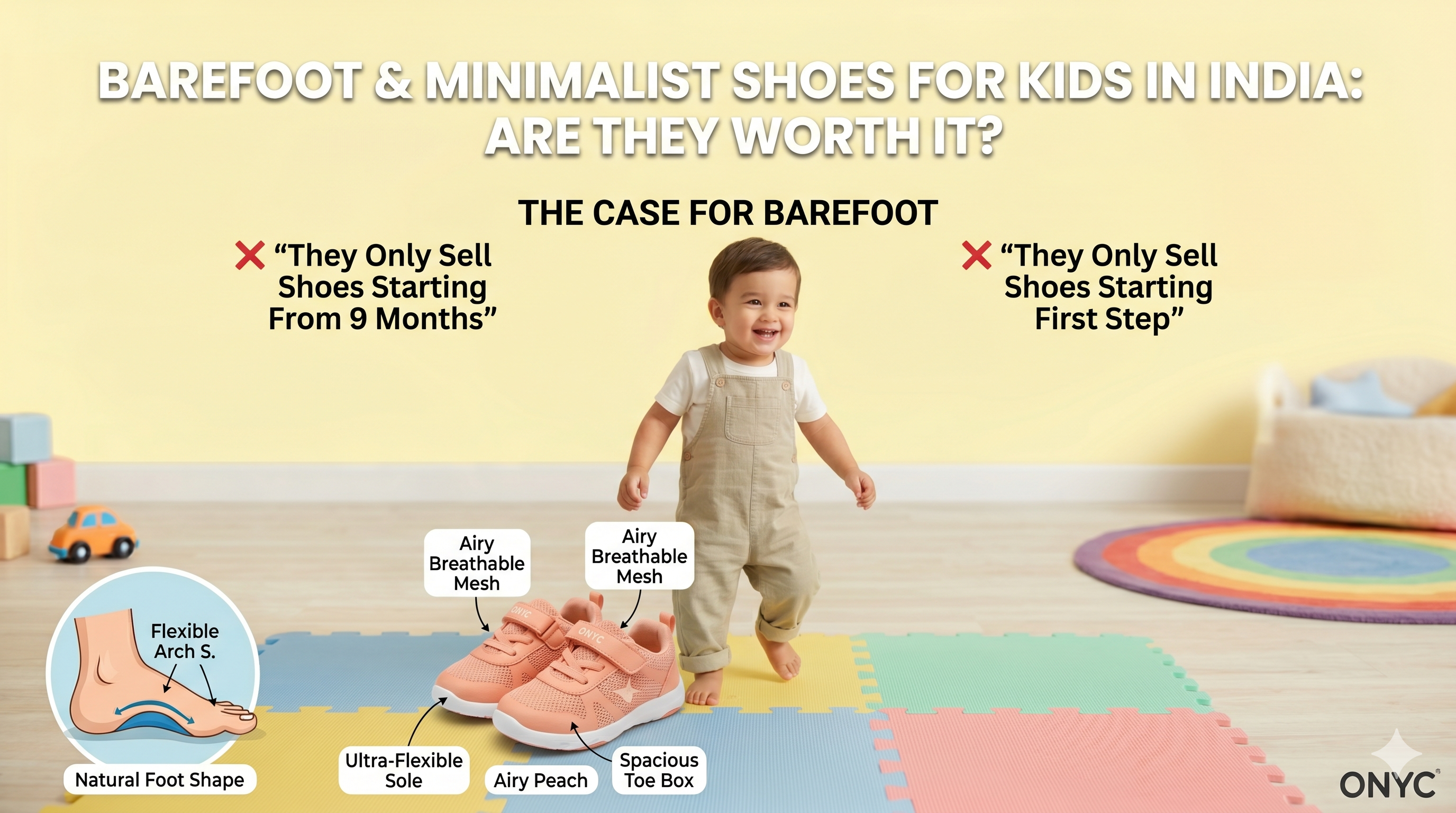
Barefoot & Minimalist Shoes for Kids in India: Are They Worth It?
As parents, we all want to give our children the best start in life and that begins from the ground up, quite literally. In recent years, a quiet revolution has been taking place in Indian parenting communities: the rise of barefoot shoes and minimalist shoes for kids. But are they just a trend, or is there real science behind them?
In this guide, we break down everything Indian parents need to know about barefoot and minimalist footwear from what they actually are, to whether they're the right choice for your infant, toddler, or kindergartener.
What Are Barefoot Shoes and Minimalist Shoes?
Before diving in, it's important to understand what these terms actually mean.
Barefoot shoes (also called zero-drop shoes) are designed to mimic the feeling of walking barefoot. They have:
-
A completely flat sole (zero heel-to-toe drop)
-
A wide toe box to let toes spread naturally
-
Minimal cushioning
-
Thin, flexible soles that allow the foot to feel the ground
Minimalist shoes are a slightly broader category, they focus on flexible soles, lightweight construction, and natural foot movement, but may have slightly more cushioning than pure barefoot shoes.
Both are designed with one goal: to let the foot function the way nature intended.
Why Are Indian Parents Talking About This?
The conversation around barefoot and minimalist footwear for kids has grown significantly in India, especially among urban parents in cities like Mumbai, Bengaluru, Delhi, and Pune. Searches for terms like "best minimalist shoes for children in India" and "barefoot shoes for infants online India" have been rising steadily.
The reason? Parents are becoming more aware of how conventional shoes, especially those with stiff soles, elevated heels, and narrow toe boxes can affect a child's developing feet.
The Science Behind Barefoot Footwear for Kids
Children's feet are not miniature versions of adult feet. At birth, a baby's foot is made almost entirely of cartilage. This cartilage gradually hardens into bone over the first 18 years of life. During this time, the foot is extremely moldable, which means the wrong footwear can actually shape the foot incorrectly.
Here is what research and paediatric podiatrists tell us:
1. Natural Foot Development Requires Freedom of Movement
When babies and toddlers go barefoot, their feet naturally strengthen. The muscles, tendons, and ligaments develop through contact with varying surfaces. Stiff shoes limit this movement and can delay the development of the foot's natural arch.
2. Wide Toe Boxes Prevent Deformities
Conventional shoes with narrow toe boxes can push toes together over time, leading to conditions like bunions, hammertoes, and flat feet. Barefoot and minimalist shoes allow toes to splay naturally during each step.
3. Thin, Flexible Soles Improve Balance and Coordination
Thick cushioned soles reduce sensory feedback from the ground. When children can feel the ground beneath them, their bodies naturally adjust posture and balance. This is especially important during the early walking stages.
Are Barefoot Shoes Good for Infants and Toddlers?
Yes, with some important nuances.
For infants (0–12 months): The best footwear for infants is no footwear at all indoors. Let babies wiggle and flex their feet freely. When footwear is needed (for warmth or going outside), choose extremely soft, flexible shoes with no rigid structure.
For toddlers (1–3 years): This is the golden period for barefoot-style footwear. As your child takes their first steps, the foot needs to feel the ground to build coordination. Look for shoes with:
-
Thin, bendable soles
-
Wide toe boxes
-
Soft, breathable uppers
-
No elevated heel
At ONYC, our Toddler's First Step Shoes are built on exactly these principles — lightweight, flexible construction that supports natural movement from the very first step. Explore our Boys' Shoes and Girls' Shoes designed for growing feet.
For kindergarteners (3-6 years): Children at this age are active and need a bit more protection for outdoor play. Minimalist shoes with flexible soles work very well here. The key is to avoid thick, rigid soles that restrict natural bending of the foot.
How to Choose Barefoot or Minimalist Shoes for Kids in India
When shopping for barefoot or minimalist footwear for your child in India, keep these features in mind:
The Twist Test
Pick up the shoe and twist it from both ends. A good minimalist shoe should twist and bend easily. If it's rigid and stiff, it will restrict your child's natural foot movement.
The Bend Test
Fold the shoe in half from toe to heel. A genuinely flexible sole will fold with almost no resistance.
Wide Toe Box
Look at the front of the shoe. Is there enough room for the toes to spread out comfortably? The widest part of the shoe should match the widest part of your child's foot.
Lightweight Construction
Heavier shoes tire out small feet faster. Always check the weight of the shoe — the lighter, the better for young children.
Breathable Materials
India's climate, especially in summer and monsoon, demands breathable footwear. Look for mesh uppers, water-based materials, or fabric that allows airflow.
Non-Slip Soles
While soles should be thin and flexible, they should still have a textured grip to prevent slips especially important on Indian marble floors and wet surfaces.
Barefoot Shoes vs Regular Kids Shoes: A Quick Comparison
|
Feature |
Barefoot / Minimalist Shoes |
Regular Kids Shoes |
|
Sole thickness |
Thin & flexible |
Thick & cushioned |
|
Toe box |
Wide, roomy |
Often narrow |
|
Heel drop |
Zero or minimal |
Often elevated |
|
Sensory feedback |
High |
Low |
|
Weight |
Very light |
Heavier |
|
Best for |
Natural development |
General everyday use |
|
Indian availability |
Growing |
Widely available |
Are Barefoot Shoes Worth It for Indian Kids?
The short answer: Yes, especially for the 0–6 age group.
India's warm climate actually makes barefoot and minimalist footwear an excellent fit. Children play on a variety of surfaces from smooth floors at home to sandy playgrounds and garden paths. Flexible, thin-soled shoes let them adapt naturally.
However, a few things to keep in mind for the Indian context:
-
Hygiene matters: With outdoor dust and uneven terrain, make sure soles have adequate grip and are easy to clean
-
Monsoon season: During rains, waterproof or quick-dry materials are essential even in minimalist shoes
-
School requirements: Many Indian schools require specific closed-toe shoes — check if flexible sole options meet the school's dress code
ONYC's Approach: Comfort-First Footwear for Indian Kids
At ONYC, every shoe in our collection is built around the same philosophy that drives barefoot footwear thinking, let the foot move naturally. Our toddler shoes and first-step shoes feature:
-
Lightweight construction that doesn't weigh little feet down
-
Flexible, bendable soles for natural movement
-
Soft, padded footbeds for all-day comfort
-
Non-slip rubber soles for safety on all surfaces
-
Water-based, non-toxic colours safe for sensitive skin
-
Breathable materials suited to India's climate
Whether you're looking for boys' shoes or girls' shoes, ONYC's designs ensure your child's feet develop healthily at every stage.
Frequently Asked Questions
Q1. At what age can my child start wearing minimalist shoes?
You can introduce soft, flexible footwear as soon as your baby starts pulling themselves up to stand typically around 9–12 months. True minimalist shoes with thin soles are ideal from the first steps onwards.
Q2. Can barefoot shoes be worn to Indian schools?
It depends on the school's policy. Many flexible sole sneakers and shoes qualify for school wear. ONYC's range of boys' and girls' shoes offers flexible, school-appropriate options.
Q3. Where can I buy minimalist kids shoes online in India?
You can explore ONYC's full collection at onyc.in. We deliver across 20,000+ pincodes in India with free shipping on prepaid orders.
Q4. Are barefoot shoes good for flat-footed children?
Paediatric podiatrists often recommend flexible, minimalist footwear for children with flat feet as it encourages the foot's natural arch to develop. Always consult your child's doctor for specific advice.
Q5. How do I know if the barefoot shoes fit correctly?
There should be about a thumb's width of space between the longest toe and the shoe tip. The shoe should flex easily and the child should be able to wiggle their toes freely inside.
Final Thoughts
Barefoot and minimalist shoes for kids are not just a trend, they are backed by a solid understanding of how children's feet grow and develop. For Indian parents looking to give their children a natural, healthy start, choosing flexible, lightweight, breathable footwear is one of the best decisions you can make.
At ONYC, we believe every step matters. Explore our collection of thoughtfully designed kids' footwear that supports natural development while keeping your little one stylish and comfortable.
Shop Boys' Shoes | Shop Girls' Shoes | Shop All Kids' Footwear