The Shoe Storage Mistake Making Your Kids' Footwear Smell (And How to Fix It)
The Text Message That Changed Everything
Saturday, 11:30 AM
"Can you smell that from the hallway, or is it just me?"
My sister sent this while visiting. I knew exactly what she meant.
The moment you opened our front door, it hit you: that unmistakable scent of children's footwear. Not cute-baby-smell. Not fresh-laundry-smell.
That smell.
You know the one. The smell that makes you wonder if something died in the shoe rack. The smell that has you Googling "how to disinfect an entire house" at 2 AM.
The weird part? I'd just washed half those shoes the week before.
So why did they still smell?
Turns out, I'd been making a huge mistake. And if your kids' shoes smell bad despite your best efforts, you're probably making it too.
The Storage Mistake 90% of Parents Make
Here it is, the culprit:
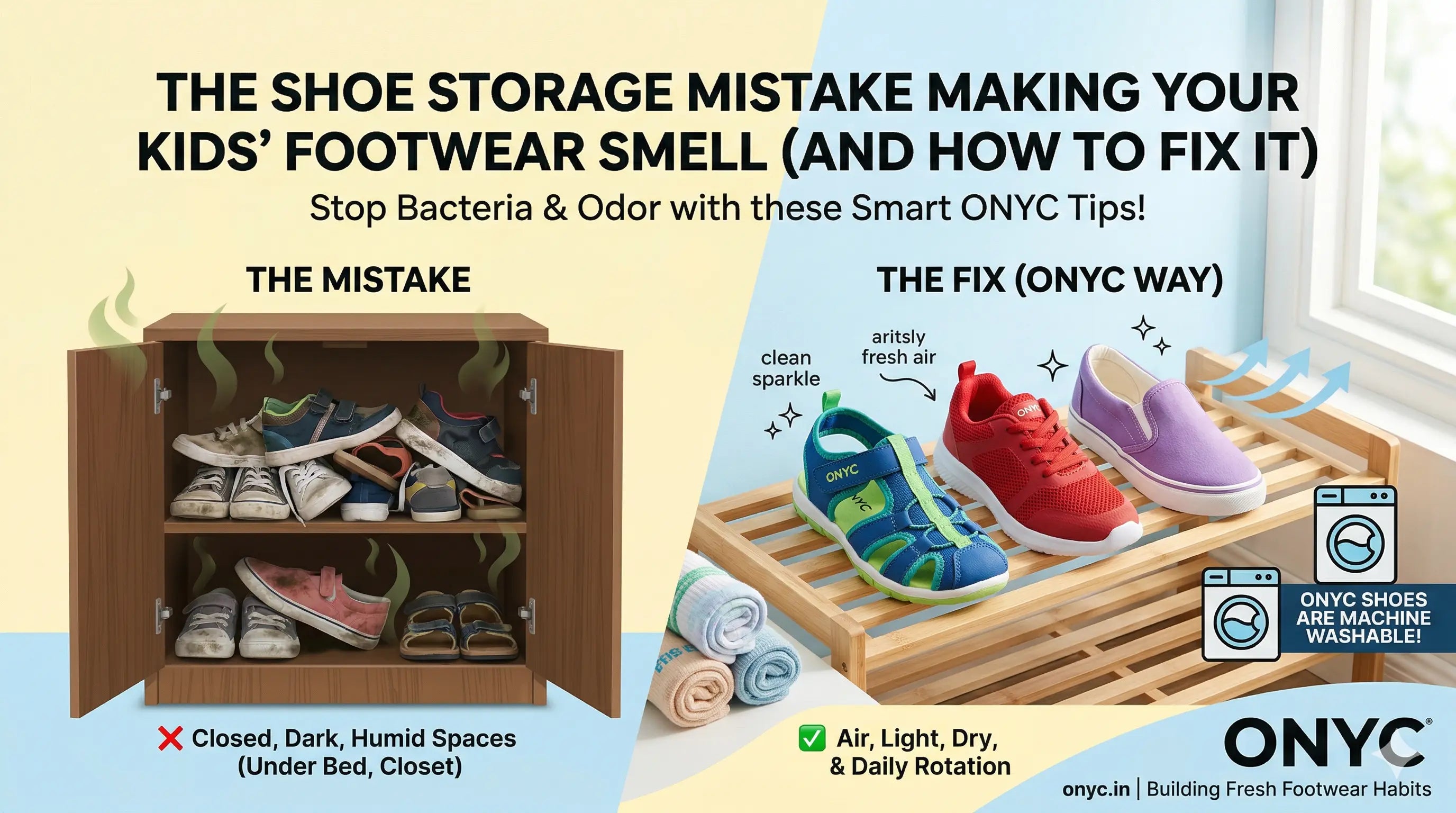
Storing shoes in closed, dark, humid spaces immediately after wear.
That's it. That's the mistake.
Your child comes home from school, kicks off sweaty sandals, and they go straight into:
-
A closed shoe cabinet
-
A cramped shoe rack in a dark corner
-
A bedroom closet with no airflow
-
Under the bed (worst offender!)
-
Piled in a basket by the door
What happens next:
-
Moisture gets trapped (from sweat, rain, puddle splashing)
-
Bacteria multiply in dark, warm conditions
-
Odor compounds form (that's the smell you're smelling)
-
Material degradation begins (shortening shoe lifespan)
-
Mold and mildew develop in seams and insoles
Within 24 hours, you've created the perfect bacteria breeding ground.
And no amount of washing fixes the problem if you keep repeating the storage mistake.
Why Kids' Shoes Smell Worse Than Adults'
Let's get scientific for a moment.
Children's feet produce more sweat than adult feet because:
-
Higher metabolic rates (kids are hotter!)
-
More active lifestyles (constant movement = constant sweating)
-
Faster cell turnover (more dead skin cells = more bacteria food)
-
Less developed sweat regulation (they don't "adjust" to temperatures as well)
Add to this:
-
Kids forget to take shoes off when feet get hot
-
They play harder (more sweat, more dirt)
-
Shoe materials matter (cheap synthetic = less breathability)
-
Wear patterns (same shoes every day without rotation)
The result? Your child's kids shoes smell bad faster and more intensely than your own footwear.
It's not your imagination. It's biology.
The Science of Shoe Odor (And Why Storage Matters)
The Bacteria Triangle
Shoe odor requires three things:
-
Moisture (from sweat or external water)
-
Warmth (body heat or ambient temperature)
-
Darkness (bacteria thrive without UV light)
When you store worn shoes in a closed cabinet, you've just created ideal conditions for all three.
The Primary Culprits
The bacteria causing that smell are:
-
Brevibacterium linens (same bacteria in stinky cheese!)
-
Staphylococcus epidermidis (lives on skin)
-
Corynebacterium (produces the "vinegary" smell)
These bacteria feed on:
-
Dead skin cells shed from feet
-
Sweat residue in shoe material
-
Dirt and organic matter tracked in
Why Washing Alone Doesn't Work
Washing kills bacteria. Great!
But if you then store shoes in the same bacteria-breeding conditions, you're just:
-
Creating a moist environment (from washing)
-
Adding warmth (drying in closed spaces)
-
Providing darkness (in cabinets)
You've literally optimized conditions for bacteria to return FASTER.
That's why freshly washed shoes can smell again within days.
The Right Way to Store Kids' Footwear
Golden Rule: Air, Light, Dry
Every storage solution should prioritize:
✅ Airflow (prevents moisture buildup)
✅ Light exposure (inhibits bacteria growth)
✅ Low humidity (keeps materials dry)
Method 1: The Drying Routine (Daily)
After your child removes shoes:
-
Shake out debris (dirt, sand, small stones)
-
Remove insoles if possible (speeds drying)
-
Open velcro/untie laces completely (increases air exposure)
-
Place in well-ventilated area for 2-4 hours
Good locations:
-
Near an open window (not direct sunlight for too long)
-
On a balcony/porch (covered from rain)
-
In a room with good cross-ventilation
-
Near a fan (not direct heat!)
Avoid:
-
Immediate storage in closed cabinets
-
Dark corners without airflow
-
Bathrooms (high humidity)
-
Inside wardrobes with clothes
Method 2: The Rotation System
Never wear the same pair two days in a row.
Here's why: Shoes need 24-48 hours to fully dry out internal moisture.
Minimum shoe rotation:
-
Toddlers/Preschoolers: 2-3 pairs (rotate daily)
-
School-age kids: 3-4 pairs (different types for different activities)
-
Active kids (sports): 4+ pairs (prevents overuse of any one pair)
Example weekly rotation:
-
Monday, Wednesday, Friday: Everyday sandals
-
Tuesday, Thursday: Backup sandals or sneakers
-
Weekend: Flip-flops or casual wear
Want to understand why rotation matters for shoe longevity?
Read The Importance of Rotating Shoes to Prolong Their Life.
ONYC Recommendation: Stock up during our Buy 3, Get 15% OFF sale. Building a rotation is easier when it's affordable! Browse the Complete Collection.
Method 3: The Open Storage Solution
Best storage types:
-
Open shoe racks with slatted shelves (maximum airflow)
-
Wall-mounted organizers (off the ground, visible)
-
Mesh shoe bags hung on hooks (allows air circulation)
-
Tiered stands near windows or doors
Worst storage types:
-
Closed wooden cabinets
-
Plastic shoe boxes (sealed)
-
Under-bed storage bins
-
Piled in corners
DIY Hack: Repurpose a magazine rack! Lay it horizontally – each slot holds one pair with excellent airflow.
Method 4: The Deep-Clean Schedule
Even with perfect storage, shoes need periodic deep cleaning:
Weekly:
-
Wipe down exteriors with damp cloth
-
Inspect for stuck debris in treads
-
Check velcro for collected lint/hair
Bi-Weekly:
-
Remove and wash insoles (if detachable)
-
Brush soles to remove embedded dirt
-
Air shoes outdoors for 4+ hours
Monthly:
-
Machine wash fabric shoes (ONYC shoes are machine washable!)
-
Hand-wash leather/specialty materials
-
Replace heavily worn insoles
-
Treat with odor-preventive spray (natural options below)
The Material Factor: Why Some Shoes Smell More
Not all kids footwear is created equal when it comes to odor resistance.
Breathable = Less Smell
Best materials for odor control:
-
Mesh fabric (maximum airflow)
-
Canvas (absorbs and releases moisture)
-
Quality leather (natural breathability)
-
Technical synthetics (designed for moisture-wicking)
Worst materials:
-
Cheap plastic (traps moisture)
-
Low-quality rubber (doesn't breathe)
-
Non-porous synthetics (no air exchange)
ONYC Advantage: All ONYC footwear uses breathable materials specifically chosen for Indian climate conditions. The fabric allows air circulation while remaining durable – the best kids shoes balance of both needs.
Browse by material type:
The Insole Impact
Insoles absorb the most sweat, making them the #1 odor source.
Upgrade your insoles:
-
Antimicrobial insoles (kill bacteria)
-
Activated charcoal insoles (absorb odor)
-
Cedar wood insoles (natural deodorizer)
-
Washable/replaceable insoles (easy maintenance)
ONYC Feature: Our cushioned footbeds are designed to be easily cleaned and are made from materials that resist bacterial growth.
Natural Solutions to Combat Shoe Odor
Prevention (Best Option)
Baking Soda Sachets:
-
Fill small cloth bags or old socks with baking soda
-
Place one in each shoe after wear
-
Leave overnight
-
Remove before wearing
-
Replace baking soda monthly
How it works: Baking soda absorbs moisture and neutralizes odor compounds.
Tea Bags (Yes, Really!):
-
Use dry, unused black tea bags
-
Place 1-2 in each shoe
-
Leave for 24 hours
-
Discard after 3-4 uses
How it works: Tannins in tea have antibacterial properties and absorb moisture.
Active Treatment (For Existing Odor)
Sunlight Exposure:
-
Place shoes in direct sunlight for 2-3 hours
-
UV rays kill bacteria naturally
-
Heat helps evaporate trapped moisture
-
Don't overdo it (can fade colors or dry out materials)
White Vinegar Spray:
-
Mix 1 part white vinegar, 1 part water
-
Spray inside shoes lightly
-
Let air dry completely (vinegar smell dissipates)
-
Repeat if needed
How it works: Vinegar's acidity kills odor-causing bacteria.
Freezer Method (For Non-Washable Shoes):
-
Place shoes in sealed plastic bag
-
Freeze overnight
-
Remove and air dry before wearing
-
Repeat monthly for prevention
How it works: Freezing kills many bacteria strains.
What NOT to Do
❌ Don't use perfume/cologne (masks smell temporarily, doesn't solve cause)
❌ Don't put shoes in dryer (can damage materials and adhesives)
❌ Don't use harsh chemicals (can irritate children's skin)
❌ Don't ignore persistent odor (might indicate bacterial/fungal infection)
Seasonal Storage Strategies
Monsoon Season (June-September)
The wettest months require extra vigilance.
Challenges:
-
Shoes get soaked multiple times per week
-
High humidity prevents proper drying
-
Bacteria thrive in moisture-rich environment
Solutions:
-
Double the rotation (need more pairs to allow drying time)
-
Newspaper stuffing (absorbs moisture after rain)
-
Silica gel packets in storage areas (reduces humidity)
-
Daily inspections for mold/mildew
-
Outdoor drying during breaks in rain
ONYC Monsoon Picks:
-
Quick-Dry Flip-Flops – Dry in 2-3 hours
-
Water-Resistant Sandals – Anti-skid soles for safety
Summer (March-May)
Extreme heat creates different challenges.
Challenges:
-
Excessive foot sweating
-
Faster bacteria multiplication in warmth
-
Dust and dirt accumulation
Solutions:
-
Daily washing of feet (before putting on shoes)
-
Sock rotation (if worn)
-
Frequent airing (after every wear)
-
Lighter materials (maximum breathability)
ONYC Summer Collection:
Browse lightweight sandals under 200g – perfect for hot weather!
Winter (November-February)
Cold doesn't mean no odor!
Challenges:
-
Closed shoes trap moisture
-
Less frequent washing (cold water deterrent)
-
Heating systems create dry indoor air (then humid shoes)
Solutions:
-
Indoor drying racks near (not on) heaters
-
Weekly deep cleans even in cold
-
Sock changes midday if feet sweat
-
Ventilation even when cold outside
Storage Solutions for Small Spaces
Living in an apartment? Here are compact storage ideas:
Over-Door Organizer
Hang a clear pocket organizer on bedroom/bathroom door. Shoes visible, accessible, aired.
Vertical Wall Ladder
Lean a decorative ladder against wall. Hang shoes on rungs. Functional art!
Rolling Cart
Use a wheeled cart. Move to balcony for airing, back inside for access. Maximizes small spaces.
Cube Storage with Bins
Open-front fabric bins in cube units. Air circulation while containing mess. Kid-friendly!
Command Hooks Series
Install hooks at child height. Hang sandals by straps/loops. Encourages independence!
Signs Your Child's Shoes Need Replacing (Odor-Related)
Sometimes, no amount of cleaning helps. Here's when to replace:
-
Persistent smell after multiple deep cleans
-
Visible mold/mildew that won't wash out
-
Material degradation (crumbling foam, separated soles)
-
Discoloration from bacteria/mold
-
Child complains of foot discomfort (bacteria can irritate skin)
Budget-Friendly Tip: With ONYC's multi-buy discounts, replacing worn shoes doesn't have to break the bank. Buy 3, Get 15% OFF!
Want to ensure you're buying quality that lasts? Read How to Spot Fake or Low-Quality Kids' Footwear Online.
The Machine-Washable Game-Changer
Here's why machine-washable kids' footwear is worth prioritizing:
Convenience:
-
No hand-scrubbing required
-
Consistent cleaning results
-
Saves time (throw in with regular laundry)
-
Easy to maintain cleanliness
Effectiveness:
-
Higher temperatures kill bacteria
-
Agitation removes embedded dirt
-
Detergent penetrates materials thoroughly
-
Spin cycle removes excess moisture
Cost-Effective:
-
Extends shoe lifespan significantly
-
Prevents premature replacement
-
Reduces need for specialized cleaners
-
No professional cleaning costs
All ONYC kids' footwear is machine washable. Simply:
-
Remove loose dirt
-
Place in mesh laundry bag
-
Wash on gentle, cold cycle
-
Air dry completely (never dryer!)
Result: Fresh, clean shoes ready for another round of play!
Teaching Kids to Care for Their Shoes
Make odor prevention a family habit:
Age 3-5: Basic Habits
-
Take shoes off when entering home
-
Place in designated "shoe spot"
-
Tell parent if shoes get wet
-
Help shake out dirt/sand
Age 6-8: Increased Responsibility
-
Open velcro/untie laces after wear
-
Place shoes in proper storage location
-
Identify when shoes need cleaning
-
Help with simple cleaning tasks
Age 9+: Full Ownership
-
Manage own shoe rotation
-
Perform basic cleaning independently
-
Monitor for wear and tear
-
Request replacements when needed
Make it Fun:
-
"Shoe check" sticker chart
-
Weekly "freshest shoes" award
-
Responsibility = privileges (new designs!)
Frequently Asked Questions
Q: Why do kids' shoes smell bad even after washing?
A: Usually due to improper drying and storage. If shoes are stored in closed, dark spaces while still damp, bacteria multiply rapidly. Always air-dry completely in well-ventilated areas before storing.
Q: How to store kids' footwear to prevent smell?
A: Store in open, well-ventilated areas with airflow. Use open shoe racks, avoid closed cabinets. Rotate shoes daily to allow 24-48 hours drying time between wears.
Q: What causes kids' shoes to smell worse than adults'?
A: Children's feet sweat more due to higher metabolic rates and constant activity. They also produce more dead skin cells (bacteria food) and often forget to remove shoes when hot, creating ideal bacterial growth conditions.
Q: Can I use baking soda in kids' shoes?
A: Yes! Baking soda is safe and effective. Place sachets inside shoes overnight to absorb moisture and neutralize odors. Replace monthly.
Q: How often should I wash kids' shoes?
A: For daily-wear shoes: every 2-3 weeks minimum. For sports/athletic shoes: weekly. For monsoon-season shoes: after every heavy wetting. Machine-washable shoes like ONYC footwear make this easy!
Q: Why do some shoes smell more than others?
A: Material quality matters. Cheap synthetics and plastics don't breathe, trapping moisture and bacteria. Quality breathable shoes with mesh or canvas allow air circulation, preventing odor buildup.
Q: Is shoe odor a sign of foot fungus?
A: Not always, but it can be. If your child has persistent foot odor, itching, redness, or skin changes, consult a pediatrician. Otherwise, it's usually just bacteria from normal sweating.
Q: Can sunlight damage kids' shoes?
A: Extended exposure can fade colors and dry out certain materials. Limit direct sunlight to 2-3 hours for bacteria-killing benefits without material damage.