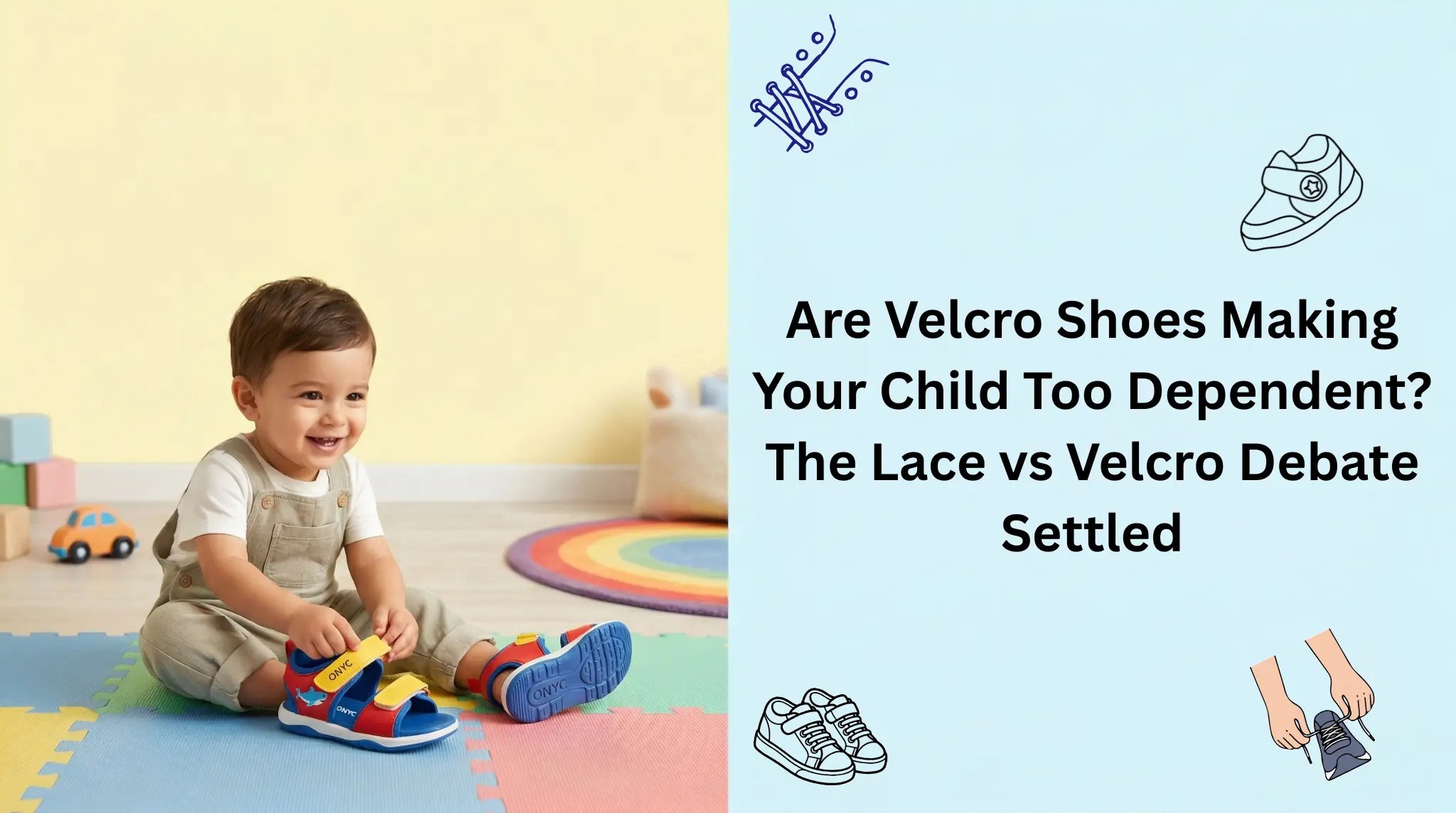
Are Velcro Shoes Making Your Child Too Dependent? The Lace vs Velcro Debate Settled
The Playground Moment That Made Me Question Everything
Last week, I watched my 6-year-old daughter sit on the school stairs, waiting.
Not for me. Not for her teacher. She was waiting for her older friend to tie her shoe.
A shoe she'd been wearing for months. A simple bow that other first-graders were managing just fine.
And it hit me: Her velcro shoes might be making things too easy.
Don't get me wrong – velcro is brilliant. It's quick, reliable, and perfect for rushed mornings. But somewhere between toddlerhood and primary school, many parents (myself included) stop asking an important question:
"Is my child ready to move beyond velcro?"
If you've ever wondered the same thing, you're not alone. The velcro vs lace debate is one of those parenting decisions that seems small but carries surprising weight in your child's development.
Let's settle this once and for all.
The Truth About Velcro Shoes and Independence
First, let's be clear: Velcro shoes are not inherently bad.
They've revolutionized kids' footwear for good reasons:
-
Speed: 2 seconds vs 30 seconds to put on shoes
-
Accessibility: Perfect for kids with motor skill challenges
-
Reliability: No tripping over untied laces
-
Convenience: Makes morning routines manageable
But here's what research and child development experts tell us:
Learning to tie shoes develops:
-
Fine motor skills (finger dexterity and hand-eye coordination)
-
Problem-solving abilities (sequential thinking)
-
Patience and persistence (it takes practice!)
-
Independence and confidence (mastering a "grown-up" skill)
-
Spatial reasoning (understanding how loops and knots work)
The question isn't "velcro vs laces" – it's "velcro OR laces at what age?"
The Age-by-Age Guide: When to Use What
Ages 1-3: Velcro All the Way
Why Velcro Wins:
-
Toddlers lack fine motor skills for laces
-
Independence matters more than lace-tying
-
Safety is paramount (no tripping hazards)
-
Quick changes for bathroom emergencies
-
Encourages self-sufficiency (they can do it themselves!)
ONYC Recommendation:
Toddlers' First Step Shoes with easy velcro closures. The adjustable straps accommodate growing feet while building confidence.
Red Flag: Avoid laces entirely at this age – they're a safety and frustration hazard.
Ages 4-5: The Transition Zone
Why This Is Tricky: Some 4-year-olds are ready to learn. Most aren't. This is the "it depends" stage.
Signs Your Child Might Be Ready:
-
Can button their own shirt
-
Shows interest in "how things work"
-
Demonstrates patience with puzzles
-
Asks to try tying shoes
-
Attends to tasks for 5+ minutes
Signs They're NOT Ready:
-
Struggles with basic motor tasks (zippers, snaps)
-
Gets frustrated easily
-
Resists learning new physical skills
-
Still needs help with most dressing tasks
ONYC Recommendation:
Stick with velcro for daily wear (school, play) but introduce lace-up sneakers for "practice time" at home. This removes pressure while building skills.
Check out the ONYC Velcro Sandals Collection for reliable everyday options that let kids focus on other developmental milestones.
Pro Tip: Don't force it. Shoe-tying readiness varies wildly. Some kids master it at 4; others need until 7. Both are completely normal.
Ages 6-7: Time to Learn
Why This Matters: By age 6-7, most children have the fine motor skills to learn lace-tying. This is when continued velcro dependence can become an issue.
What Happens If They Don't Learn:
-
Social pressure: Other kids notice and may comment
-
Missed development: Fine motor skills aren't practiced
-
Reduced independence: Always needs help in PE class
-
Confidence issues: Feels "behind" peers
The Sweet Spot Approach:
-
70% velcro: For school, daily wear, ease
-
30% laces: For sports, special occasions, skill-building
ONYC Recommendation:
Primary school kids benefit from having both types. ONYC's lightweight sneakers with laces are perfect for PE class (where they'll have teacher support) while velcro sandals work for everyday school wear.
Teaching Method: Use the "bunny ears" technique – most kids find it easier than the traditional method.
Ages 8+: Laces Should Be Primary
Why It's Time: By age 8, children who haven't learned to tie shoes may:
-
Feel embarrassed in social situations
-
Avoid certain activities (sports teams, camps)
-
Miss out on shoe options (many cool designs have laces!)
-
Lag in fine motor development
Exception: Children with dyspraxia, autism, or motor skill challenges may benefit from continued velcro use. Always prioritize your child's individual needs over age-based guidelines.
The Reality Check: If your 8-year-old refuses to learn despite having the physical ability, it's often about:
-
Convenience (why bother when velcro is easier?)
-
Anxiety (fear of doing it "wrong")
-
Lack of necessity (all their shoes are velcro)
Solution: Natural consequences. Choose shoes with laces for preferred activities. They'll learn quickly when it matters to them!
The Surprising Benefits of Learning to Tie Shoes
1. Fine Motor Skill Development
Tying shoelaces uses the same finger movements needed for:
-
Writing (especially cursive)
-
Using utensils properly
-
Buttoning small buttons
-
Playing musical instruments
-
Arts and crafts (knots, beading, sewing)
Occupational therapists often use lace-tying as a diagnostic tool for fine motor delays.
2. Cognitive Development
Learning laces requires:
-
Sequential memory (step 1, step 2, step 3...)
-
Spatial reasoning (which loop goes where?)
-
Problem-solving (when it doesn't work the first time)
-
Persistence (mastering it takes practice)
These are the same skills used in mathematics, reading, and logical thinking.
3. Confidence and Independence
There's something powerful about a child mastering a "grown-up" skill. The pride on their face when they tie shoes for the first time? Priceless.
This confidence transfers to:
-
Trying new challenges
-
Asking for help when needed
-
Believing in their ability to learn hard things
-
Independence in daily routines
When Velcro Is Actually the Better Choice
Let's be balanced here. Laces aren't always superior. Velcro makes sense for:
1. Children with Special Needs
-
Dyspraxia: Motor planning difficulties make laces frustrating
-
Autism: Some children find the sensory experience of tying overwhelming
-
ADHD: The time/focus required can be prohibitive
-
Physical disabilities: Velcro offers crucial independence
2. Specific Activities
-
Water sports: Velcro sandals dry faster and adjust easily
-
Quick changes: Swimming lessons, sports rotations
-
Outdoor play: Less chance of untied-lace accidents
ONYC's waterproof sandals with secure velcro are perfect for these scenarios.
3. Backup Shoes
Even lace-proficient kids benefit from having velcro options for:
-
Sick days (when energy is low)
-
Rushed mornings
-
Travel (less to manage)
-
Casual weekend wear
The "Both" Philosophy: Why Not Have Options?
Here's our recommended approach for most families:
Daily Rotation Strategy:
-
Monday, Wednesday, Friday: Velcro shoes (ease and speed)
-
Tuesday, Thursday: Lace-up shoes (practice and skill maintenance)
-
Weekends: Child's choice (empowerment!)
Activity-Based Selection:
-
School: Velcro (unless laces are required)
-
Sports/PE: Laces (proper support, teaches responsibility)
-
Casual outings: Velcro (comfort and convenience)
-
Special events: Laces (formality, pride in ability)
This approach:
- Maintains lace-tying skills without frustration
- Offers convenience when needed
- Builds confidence through choice
- Prepares for various real-world scenarios
Want to ensure your child's shoes are supporting healthy development regardless of closure type? Read our guide on Why Healthy Foot Development in Early Childhood Matters.
How to Teach Lace-Tying (When They're Ready)
Step 1: Assess Readiness
Don't start teaching until your child shows interest AND has the motor skills. Forcing it creates frustration.
Readiness Checklist:
-
Can tie a simple knot in string
-
Shows interest in learning
-
Maintains attention for 5+ minutes
-
Doesn't get frustrated easily with new tasks
Step 2: Choose the Right Method
The Bunny Ears Method (Easiest for Kids):
-
Make an X with laces
-
Pull one lace through to tie base knot
-
Make two loops ("bunny ears")
-
Tie the bunny ears together
-
Pull tight
The Traditional Loop Method (More Advanced):
-
Tie base knot
-
Make one loop
-
Wrap other lace around loop
-
Push through hole to make second loop
-
Pull tight
Pro Tip: Use different colored laces (one red, one blue) to help visualize which lace goes where.
Step 3: Practice Off the Foot
Use a practice board, old shoe, or even a stuffed animal with lace-up "shoes." This removes the awkward angle of working on their own feet.
Step 4: Be Patient
Most kids take several weeks to master lace-tying. That's normal! Celebrate small progress:
-
Day 1: Makes the first knot
-
Day 5: Makes one loop
-
Day 12: Completes bow (even if it's loose)
-
Day 20: Ties independently!
Step 5: Daily Practice
5 minutes per day is better than 30 minutes once a week. Make it part of the routine:
-
Morning shoe time
-
Before bed (practice on tomorrow's shoes)
-
During favorite TV show
-
As a "game" with siblings
Common Mistakes Parents Make
❌ Mistake 1: Teaching Too Early
Why It Backfires: Frustration builds negative associations. A child who "fails" at 4 may resist trying again at 6.
Solution: Wait for developmental readiness, not calendar age.
❌ Mistake 2: Using Complex Methods
Why It Backfires: Advanced techniques overwhelm beginners.
Solution: Start with bunny ears. Graduate to loop method later if desired.
❌ Mistake 3: Only Offering Velcro Shoes
Why It Backfires: No necessity = no motivation to learn.
Solution: Introduce lace-up options for activities your child cares about.
❌ Mistake 4: Comparing to Other Kids
Why It Backfires: "But Rahul already knows!" creates shame, not motivation.
Solution: Frame it as a personal skill to master, not a competition.
❌ Mistake 5: Doing It for Them
Why It Backfires: If you always tie their shoes, why would they learn?
Solution: Build in extra time. Let them try, even if it's imperfect.
For more on avoiding common footwear mistakes, check out 5 Myths About Kids Footwear Every Parent Still Believes.
What About Elastic "No-Tie" Laces?
You've probably seen them: laces that look traditional but are actually stretchy and require no tying.
Pros:
-
Best of both worlds aesthetically
-
Great for kids who can tie but forget
-
Useful for sports (stays tight, no mid-game retying)
Cons:
-
Doesn't teach the actual skill
-
Can stretch out over time
-
More expensive than regular laces
Our Take: Elastic laces are a fine compromise for kids who've learned lace-tying but struggle with speed or memory. Not recommended as a permanent substitute for developing the skill.
The Social Dimension: What Kids Notice
By age 7-8, children become acutely aware of what their peers can do.
A child who can't tie shoes may:
-
Avoid lace-up shoes even if they prefer the style
-
Ask parents not to buy certain shoes
-
Feel self-conscious during PE class
-
Skip activities requiring lace-up footwear (ice skating, certain sports)
Parent Perspective: "It's just shoes, who cares?"
Child Perspective: "Everyone knows I can't do it, and I feel different."
This doesn't mean you should pressure a 5-year-old to learn. It DOES mean that by ages 7-8, the social benefits of shoe-tying independence become real.
The Special Needs Conversation
If your child has diagnosed or suspected:
-
Motor planning difficulties
-
Sensory processing challenges
-
Developmental delays
-
Physical disabilities
Velcro may be a long-term or permanent solution – and that's completely okay.
Independence matters more than how shoes close. If velcro enables your child to dress themselves, participate in activities, and feel confident, that's the right choice.
Consult with occupational therapists for personalized guidance. Many children with challenges can learn adapted methods when ready, but there's no shame in choosing the closure that works best for your child's needs.
Choosing the Right Shoes: Beyond the Closure
Whether velcro or laces, ALL kids' shoes should have:
1. Proper Fit
-
Thumb's width between toes and shoe end
-
Snug heel (no slipping)
-
No pinching at sides
-
Room for growth (but not too much)
Use ONYC's Size Chart for accurate sizing.
2. Lightweight Construction
Heavy shoes tire little legs. ONYC footwear stays under 200 grams – light enough for all-day wear.
3. Breathable Materials
Prevents sweaty, smelly feet and reduces bacteria growth.
4. Flexible Soles
Especially important for developing feet. Check if the sole bends at the ball of the foot.
5. Anti-Skid Outsoles
Safety first! All ONYC shoes feature anti-skid technology.
Want to know if your child's current shoes are causing hidden problems?
Read Are Hard Soles Bad for Kids? What Parents Should Know About Growing Feet.
Real Parent Stories
Anita, Pune
"My son is 7 and still prefers velcro. I was worried until his teacher mentioned he's advanced in fine motor skills (great handwriting, loves art). Turns out he CAN tie shoes, he just chooses not to for speed. We compromised: laces for karate (where it's required), velcro for everything else."
Vikram, Chennai
"We tried teaching our daughter at 5. Total disaster – tears, frustration, refusal. We dropped it. At 6.5, she asked to learn because her best friend wore 'cool shoes with strings.' She mastered it in 2 weeks. Lesson learned: readiness matters more than age."
Meera, Kolkata
"My son has ADHD. Laces were a daily battle – he'd forget to tie them, trip, get distracted mid-tying. We switched to ONYC velcro sandals for school and his stress dropped dramatically. For sports, his coach helps with lace shoes. No shame in choosing what works!"
The Verdict: So, Velcro or Laces?
Here's the bottom line:
For Ages 1-5: Velcro is perfect. Focus on independence and safety.
For Ages 6-7: Introduce laces gradually while maintaining velcro options.
For Ages 8+: Prioritize laces for development, keep velcro as a backup.
For Special Needs: Choose what enables independence, period.
The Real Answer: It's not either/or. It's both, at the right times, for the right reasons.
Your child isn't "behind" if they use velcro at 7. They're not "advanced" if they learn laces at 4. Development isn't a race.
But by age 8, if there are no physical barriers, learning to tie shoes offers genuine benefits in motor skills, confidence, and independence.
Choose shoes that:
- Fit your child's current abilities
- Support their developmental stage
- Enable independence
- Build confidence
- Are appropriate for activities
Everything else is just details.
Frequently Asked Questions
Q: My 9-year-old still can't tie shoes. Is this a problem?
A: It depends. If they can't due to motor skill challenges, consult an occupational therapist. If they won't because they've never needed to, it's time to create necessity. Buy lace-up shoes for their favorite activities. They'll learn quickly when motivated.
Q: Should I buy lace-up shoes even if my child can't tie them yet?
A: For practice at home, yes! For daily school wear, probably not (unless you're ready to tie them multiple times daily). Introduce laces gradually, not all at once.
Q: Are there closure options besides velcro and laces?
A: Yes! Slip-ons, elastic openings, zipper closures, and buckles exist. These can be useful transitions between velcro and laces.
Q: My child learned to tie shoes but now refuses. What gives?
A: Common! They mastered the skill but prefer convenience. Compromise: laces for special occasions/sports, velcro for daily wear. The skill is there when needed.
Q: Can velcro shoes support proper foot development?
A: Absolutely, if they fit properly! The closure type doesn't affect foot health – fit, flexibility, and support matter most. ONYC's velcro shoes are podiatrist-approved.
Q: What if other kids tease my child about velcro shoes?
A: This is tough. Options: 1) Help them learn to tie (if ready), 2) Choose stylish velcro designs that don't "look young," 3) Talk about different abilities and choices, 4) Use elastic laces for the "look" of tied shoes.
Q: At what age do most kids learn to tie shoes?
A: Most children master lace-tying between ages 6-8. Some learn at 4-5, others not until 9. All are within normal developmental ranges.
Your Action Plan
This Week:
-
Assess your child's current shoe closure preferences
-
Determine if they're developmentally ready to learn laces (if not already)
-
Inventory existing shoes – are there enough options?
-
Consider adding one pair of lace-up shoes for practice (if age-appropriate)
This Month:
-
Implement the "both" philosophy if your child is 6+
-
Dedicate 5 minutes daily to lace-tying practice (if learning)
-
Observe which closure types your child reaches for independently
-
Adjust strategy based on their comfort and confidence
This Year:
-
Gradually increase lace-up shoes if child is progressing
-
Maintain velcro options for convenience and backup
-
Celebrate milestones (first independent bow!)
-
Reassess annually as skills develope
Shop Smart: The Best of Both Worlds
Ready to build a balanced shoe collection for your child?
For Velcro Lovers:
Boys' Velcro Sandals – Quick, reliable, comfortable
Girls' Velcro Sandals – Cute designs, easy independence
Premium Shark Sandals – The velcro option kids WANT to wear
For Lace Learners:
Boys' Sneakers – Perfect practice shoes
Girls' Sneakers – Supportive and stylish
Bestsellers Collection – Tried and tested favorites
Current Offers:
- Buy 2, Get 10% OFF – Build a balanced collection!
- Buy 3, Get 15% OFF – Velcro + Laces + Backup
- First Order: ONYC5OFF for 5% extra discount
- FREE Shipping on all prepaid orders
The Bottom Line on Independence
The velcro vs lace debate isn't really about shoes.
It's about recognizing when convenience becomes crutch. When "easier" stops serving development. When it's time to let your child struggle a little – because that's where growth happens.
But it's also about recognizing that every child is different. That timelines are guidelines, not rules. That a 9-year-old using velcro due to dyspraxia is making the RIGHT choice for independence.
Trust your child. Trust the process. And give them shoes that support wherever they are right now.
Shop ONYC's Complete Collection – Velcro & Laces →
Because the best shoes are the ones your child can put on independently, wear comfortably, and feel confident in.
Need Personalized Advice?
WhatsApp: +91 82733 76777 (Mon-Sat, 10 AM - 7 PM IST)
Email: care@onyc.in
Published on ONYC Blog