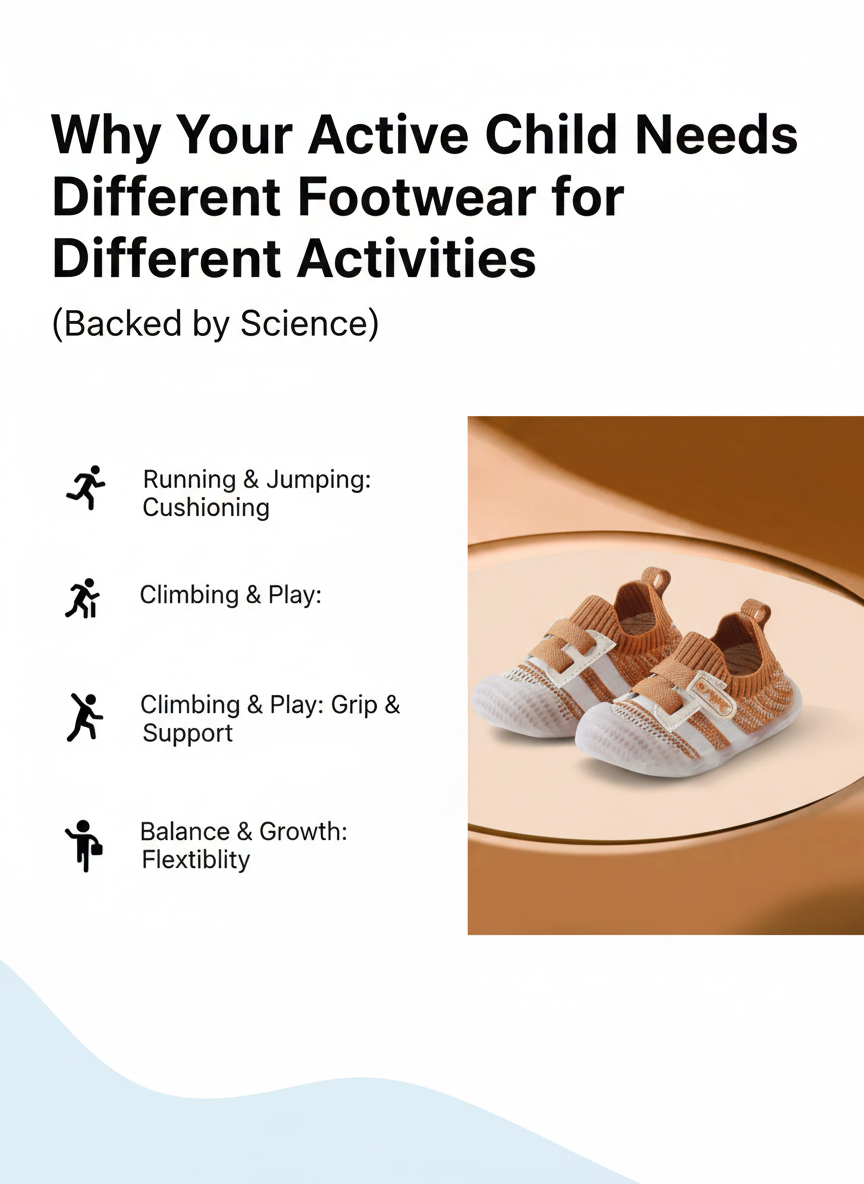
Why Your Active Child Needs Different Footwear for Different Activities (Backed by Science)
Children don’t move in straight lines.
They accelerate, pivot, climb, land, twist, sprint, and stop often within seconds. According to pediatric biomechanics research, growing feet are softer and more flexible than adult feet, making them highly responsive to pressure, impact, and surface variation.
That means the type of footwear your child wears during different activities directly affects balance, posture, and even long-term foot development. A slipper designed for indoor comfort won’t provide the grip needed for playground running.
A rigid outdoor pair may feel heavy for daily casual wear. The solution isn’t one “perfect” pair, it’s the right pair for the right purpose. When you browse our collections, you’ll notice we categorize footwear based on movement needs, not just style because activity-specific design matters more than most parents realize.
The Science Behind Growing Feet
Children’s arches are still forming, their ligaments are more elastic and heel bones, softer; because of this improper footwear during high-impact activities can increase stress on joints and ankles. Research shows that shock absorption and sole flexibility directly influence gait development in early years.
That’s why lightweight flexible footwear supports natural motion during low-impact play, while structured grip soles are essential during outdoor running or wet conditions.
It’s not about buying more. It’s about buying smarter.
Different Activities Demand Different Support
Think about your child’s daily routine:
Morning school rush. Afternoon playground. Evening family outing. Weekend travel.
Each setting demands different performance from footwear.
For example, outdoor play requires traction and durability whereas indoor wear prioritizes softness and breathability. Travel days benefit from lightweight, slip-on convenience. That’s why inside our kids collection, you’ll find options structured by comfort, flexibility, and grip levels.
Because no single sole works everywhere.
What Happens When Footwear Isn’t Activity-Appropriate?
Wearing the wrong type regularly can lead to several and severe setbacks, as listed below :
- Reduced grip on smooth surfaces
- Faster sole wear and tear
- Foot fatigue from heavy builds
- Increased slipping during wet weather
- Improper gait adaptation
- Discomfort during growth spurts
Small mismatches create big discomfort over time.
And kids don’t always articulate that discomfort, they just resist wearing the pair.
Comparison: Activity vs Footwear Type
|
Activity Type |
Recommended Footwear Features |
|
Indoor Play |
Soft sole, breathable upper |
|
Playground Running |
Anti-slip grip, shock absorption |
|
Monsoon / Wet Surfaces |
Water-friendly, textured outsole |
|
Travel / Casual Outings |
Lightweight, easy slip-on |
|
Extended Walking |
Cushioned footbed, flexible bend |
Why “One-Pair-Fits-All” Is a Myth
Parents often search for the most versatile option. While versatility matters, biomechanics suggests that repeated high-impact stress without proper cushioning increases joint strain. Similarly, overly rigid soles during light activity reduce natural foot flexibility.
Balance is key. Comfort supports confidence. Confidence supports movement. Movement supports growth.
When you explore footwear options on the homepage, consider where your child spends the most time moving. That's your starting point.
Signs Your Child Might Need Activity-Specific Footwear
Look for subtle indicators:
- Complaining of tired feet
- Frequently slipping during play
- Refusing to wear a certain pair
- Flattened soles quickly
- Uneven wear patterns
Children rarely explain discomfort in detail. They show it through behavior. Observing patterns helps you choose better.
The Long-Term Impact of Smart Choices
Footwear influences alignment from the ground up. Proper sole flexibility encourages natural arch development. Good grip reduces fall risk. Lightweight design minimizes strain during growth phases. Over time, these small decisions contribute to posture stability and movement confidence.
This isn’t about overcomplicating shopping.
It’s about respecting development.
And development doesn’t pause.
A Practical Buying Approach
Instead of asking, “Which pair looks best?” ask:
- Where will it be worn most?
- Is grip sufficient for that environment?
- Does it bend naturally at the forefoot?
- Is it light enough for extended wear?
- Does it allow slight room for growth?
When footwear matches activity level, resistance decreases and comfort becomes routine
Don’t Forget
A kid’s childhood is dynamic and their footwear should be too. One pair won’t do everything, but the right pair for the right activity? That changes how confidently your child moves.
Explore our thoughtfully designed options today and let every step support growth, safely and comfortably.
Confused about what’s your kid’s perfect fit, refer to our carefully curated collection for your little one.
FAQs –
1. Do children really need different footwear for different activities?
Yes. Growing feet require appropriate cushioning, flexibility, and grip depending on movement type and surface.
2. Is it harmful to use the same footwear everywhere?
Occasional use is fine, but consistent mismatch between activity and sole type can increase fatigue and slipping risk.
3. What type of sole is best for playground use?
Flexible soles with anti-slip grip and moderate cushioning are ideal for running and sudden stops.
4. How do I know if a shoe is flexible enough?
It should bend at the forefoot area but not fold entirely in half.
5. Where can I explore activity-based kids footwear?
You can browse structured, movement-friendly collections directly from our [Home Page], where options are categorized by comfort and performance needs.