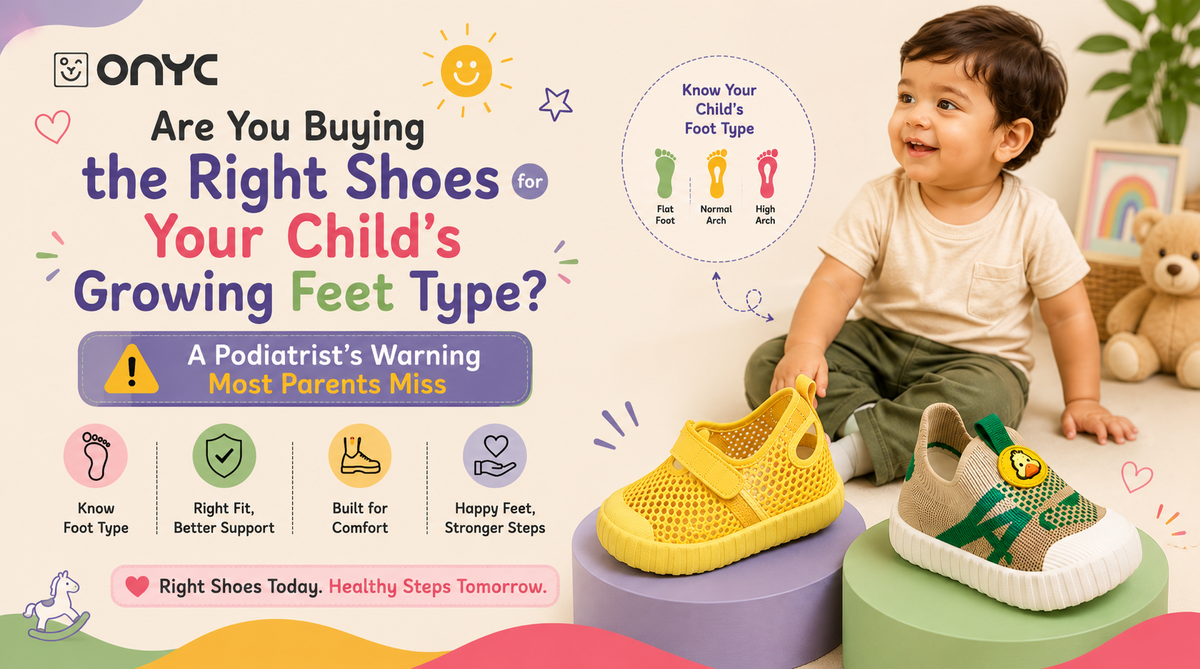
Are You Buying the Right Shoes for Your Child's Growing Feet Type? A Podiatrist's Warning Most Parents Miss
"They're just kids. They'll outgrow them anyway."
It's one of the most common things parents say while shopping for children's shoes and it's also one of the biggest mistakes they unknowingly make.
Every year, thousands of parents invest in shoes based on colour, price, or popularity, believing that all children's shoes are more or less the same. But ask a podiatrist, a foot and ankle specialist and you'll hear a very different perspective.
Children's feet aren't miniature versions of adult feet. They're constantly changing.
By the age of six, nearly half of a child's foot bones are still developing. Their arches are forming. Their walking pattern is evolving. Their muscles are learning to balance, jump, run, and absorb impact. During these crucial years, footwear doesn't just protect their feet, it influences how comfortably they move through the world.
This doesn't mean every child needs medical footwear.
Far from it. It simply means that shoes for growing feet should work with natural development,not against it.
So before you buy the next adorable pair, here's what pediatric foot experts and podiatrists want parents to know.
Can the Wrong Shoes Harm Your Child's Feet?
The honest answer is...
Yes, but not in the dramatic way social media often suggests. A single pair of shoes won't permanently damage healthy feet.
However, consistently wearing footwear that's too tight, too heavy, too stiff, or poorly fitted can affect comfort, movement, and natural walking habits over time.
Children rarely tell you, "My midfoot feels restricted." Instead, they communicate differently. They stop running as much, trip more often, remove their shoes immediately after school., complain that shoes feel "funny." or they simply refuse to wear them.
Many parents assume it's stubbornness. Sometimes, it's the discomfort in action.
What Do Podiatrists Actually Recommend for Toddlers?
One of the biggest misconceptions is that toddlers need very rigid shoes to "support" their feet.
Most pediatric podiatrists actually recommend something quite different.
The ideal shoe should allow the foot to move naturally while providing protection from rough surfaces.
That's why podiatrist recommended kids shoes usually share a few important characteristics.
They are:
-
Lightweight rather than bulky
-
Flexible through the forefoot
-
Wide enough for natural toe movement
-
Breathable for everyday comfort
- Secure without squeezing growing feet
The goal isn't to force the foot into position. It's to allow healthy movement while protecting it.
Every Child's Feet Are Different
No two children walk exactly the same way.
Some have slightly wider feet. Some naturally have lower arches during toddlerhood. Others are incredibly active and spend hours running, climbing, and jumping.
This is why buying shoes purely based on age can be misleading.
Instead of asking,
"Is this for a four-year-old?"
Ask,
"Does this fit my child's feet?"
Parents often search for the best for my child's feet, but the better question is whether the shoe allows their child's natural movement, rather than simply following trends.
The 5 Things Podiatrists Notice Before Recommending a Shoe
While brands and colours vary, podiatrists often evaluate footwear using the same simple criteria.
1. Flexibility
A shoe should bend naturally at the ball of the foot, not fold completely in half, but certainly not feel rigid like cardboard.
Flexible shoes support natural walking mechanics.
2. Lightweight Construction
Children take thousands of steps every day. Heavy shoes increase fatigue. Lightweight footwear encourages smoother movement and reduces unnecessary effort.
This is one reason parents increasingly prefer lightweight everyday sneakers, such as ONYC's Ludo Comfortable Lightweight Lace-Free Premium Sneakers, especially for school, travel, and daily play.
3. Toe Room
Tiny toes need room to spread. Shoes that are too narrow restrict natural movement and may become uncomfortable as children grow.
Always leave a little growing space but not so much that the foot slides around.
4. Breathability
Indian weather is demanding.
Heat, humidity, playground dust, and long school hours can quickly make feet uncomfortable. Breathable materials help reduce moisture buildup and improve overall comfort during active days.
5. Secure Fit
Shoes should stay firmly on the foot without needing constant adjustment.
Secure doesn't mean tight.mIt means stable .Children should walk naturally, not grip with their toes to stop the shoe slipping off.
Orthopedic-Friendly Doesn't Mean Medical
One phrase parents often search is:
"Orthopedic friendly kids shoes."
Many assume this means thick soles, rigid heels, or medically styled footwear.
Not necessarily. For healthy children without diagnosed foot conditions, orthopedic-friendly kids shoes simply refer to footwear that respects natural foot development.
That means:
-
Flexible movement
-
Proper cushioning
-
Comfortable fit
-
Lightweight design
-
Stable grip
- Breathable materials
Shoes don't need to "correct" healthy feet. They need to support healthy movement.
Shoes Designed for Growing Feet Should Grow With Childhood
A toddler's needs aren't the same as a six-year-old's, as children become more active, their footwear should adapt accordingly.
Their transition to preschool, playground adventures, and longer outdoor days, exploring ONYC's New Drops Collection offers parents lightweight, breathable choices designed around real childhood movement rather than fashion alone.
Because the best shoes aren't simply comfortable on day one. They continue supporting active little feet through every stage of growth.
A Quick Checklist Before Buying
Next time you're shopping, ask yourself these questions.
✔ Does the shoe bend naturally?
✔ Is it lightweight enough for everyday wear?
✔ Is there enough room for toes to move?
✔ Does it feel breathable for Indian weather?
✔ Can my child walk, run, and squat comfortably?
✔ Does it stay secure without feeling tight?
If you answered "yes" to most of these, you're already choosing quality shoes for growing feet.
What to Avoid
Parents often focus on what to buy.
It's equally helpful to know what to avoid.
-
Shoes bought two sizes bigger "to last longer"
-
Very stiff soles for first walkers
-
Heavy shoes that tire children quickly
-
Poor ventilation during Indian summers
-
Narrow toe boxes
- Fashion-first designs that compromise comfort
Remember:
Children outgrow shoes. They shouldn't have to outgrow discomfort.
Frequently Asked Questions
What shoes do podiatrists recommend for toddlers?
Podiatrists generally recommend lightweight, flexible, breathable shoes with enough room for natural toe movement. The focus is on supporting healthy walking rather than restricting foot development.
Can the wrong shoes harm my child's feet?
Poorly fitting or consistently uncomfortable shoes can affect a child's comfort, walking habits, and willingness to stay active. Choosing shoes designed for growing feet helps support healthy movement.
What makes shoes orthopedic-friendly for kids?
Orthopedic-friendly shoes are designed to encourage natural movement through flexible soles, lightweight construction, comfortable cushioning, proper fit, and breathable materials.
How do I know if my child's shoes fit correctly?
There should be enough room for the toes to move freely, the heel should stay secure without slipping, and your child should be able to walk, run, and squat comfortably.
Are lightweight shoes better for growing feet?
Yes. Lightweight shoes reduce fatigue and make it easier for children to move naturally throughout the day, especially during active play and school hours.
Your Child's Feet Are Growing Every Single Day. Their Shoes Should Respect That.
Parents spend months choosing the right school, researching the healthiest meals, comparing car seats, and baby-proofing every corner of the house. Yet something their child wears for thousands of steps every single week often gets chosen in just a few minutes.
The truth is, the best shoes aren't the ones with the loudest branding or the thickest soles, they're the ones your child barely notices because they simply feel right.
Healthy feet don't need to be forced into position. They need the freedom to grow, flex, balance, and explore naturally.
If you're looking for shoes designed for growing feet, thoughtfully crafted podiatrist recommended kids shoes, or lightweight everyday footwear that supports healthy walking without compromising comfort, explore ONYC's collection of first walker shoes, lace-free sneakers.
Because childhood is full of firsts. Every step should begin with a pair of shoes that helps your child move confidently, not one they can't wait to take off.